
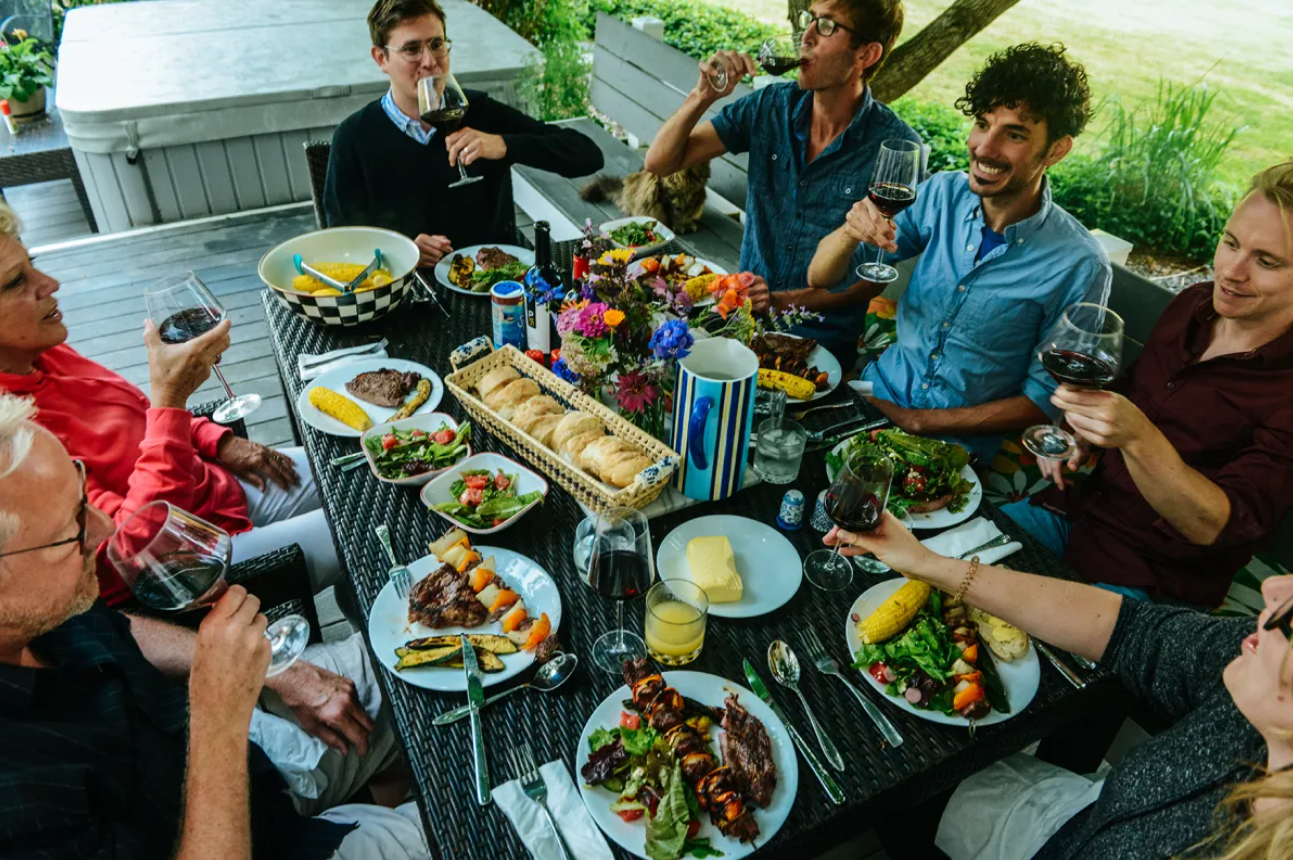
Family Day offers a moment for connection and reflection, as South Africans come together to celebrate the strength, love, and unity found in family. Picture Credit: Withthegrains
By Aisha Zardad
Family Day, observed across South Africa on Easter Monday, arrives as a quiet exhale after a deeply reflective Easter weekend. It follows the weight of sacrifice, the stillness of waiting, and the triumph of resurrection, and gently draws the focus back to something both simple and profound — one another. It is a day that does not demand attention, yet carries a meaning that is deeply rooted in the fabric of everyday life, reminding us that beyond faith, beyond reflection, beyond even renewal, there is relationship.
After a weekend that calls us to look inward, Family Day invites us to look around. It shifts our attention to the people who walk alongside us through every season — those who support us, challenge us, grow with us, and stand with us in both joy and difficulty. In a world that moves quickly, where time is often divided between responsibility and routine, this day becomes a necessary pause. It creates space not for achievement or obligation, but for presence. It reminds us that the most meaningful moments are often the ones that require nothing more than our attention.
Scripture has always placed strong emphasis on the importance of family, not only as a structure, but as a foundation for love, guidance, and belonging. In the book of Joshua, this commitment is expressed with clarity and conviction: “But as for me and my household, we will serve the Lord.” (Joshua 24:15). It is a declaration that speaks not only of faith, but of unity — a reminder that families are built not only on shared spaces, but on shared values.
Family, in its truest sense, extends beyond definition. It is not limited to bloodlines, but shaped by connection. It includes those who have stood by us in moments of uncertainty, those who have celebrated with us in times of joy, and those who have carried us when we could not carry ourselves. It is found in friendships that have become like siblings, in elders who offer wisdom, and in younger generations who remind us of hope in its purest form. Family Day, therefore, becomes an inclusive celebration — one that honours all relationships that bring meaning and grounding to our lives.
There is also a deeper spiritual reflection woven into this day. The message of Easter does not end with resurrection; it continues in the way we live and relate to one another. The grace, forgiveness, and renewal that define the Easter story find practical expression within our relationships. In the book of Colossians, this is captured in a way that speaks directly into the heart of family life: “Therefore, as God’s chosen people, holy and dearly loved, clothe yourselves with compassion, kindness, humility, gentleness and patience. Bear with each other and forgive one another… And over all these virtues put on love, which binds them all together in perfect unity.” (Colossians 3:12–14).
These words move beyond theory. They call for action — for patience in moments of frustration, for kindness in moments of tension, and for forgiveness in moments where it feels most difficult. Family Day becomes an opportunity to live these values intentionally, to not only speak of love, but to demonstrate it in the way we show up for one another.
It is also a day that quietly invites restoration. In every family, there are spaces that may have grown distant, conversations that may have been left unfinished, or moments that have created division. The themes of Easter — sacrifice, waiting, and renewal — echo strongly here. Because what is reconciliation if not choosing to rebuild? What is renewal if not choosing to begin again? Scripture reminds us of the power of unity within family: “How good and pleasant it is when God’s people live together in unity!” (Psalm 133:1). There is something deeply healing in togetherness, something that restores not only relationships, but the sense of belonging that sits at the core of who we are.
Across South Africa, this day is marked in ways that reflect both culture and community. It may be a braai shared under open skies, a meal prepared with care and enjoyed slowly, or a simple gathering where stories are exchanged and laughter fills the space. It may be a quiet moment spent reconnecting, or an active day filled with movement and celebration. However it is observed, its value does not lie in what is done, but in the intention behind it.
Because in the end, it is not the scale of the moment that matters, but the presence within it.
It is the conversations that linger.
The shared meals that bring people together.
The laughter that breaks through the ordinary.
The quiet support that speaks without words.
The time that is given, freely and intentionally.
In a world that constantly pulls us outward, Family Day becomes a gentle call to return inward — to the spaces where we are known, where we are supported, and where we are reminded of who we are beyond titles, roles, and responsibilities. It reminds us that relationships are not static, but living, growing, and in need of care.
Scripture reinforces this sense of responsibility and nurture within family life, particularly in the way we guide and shape future generations: “Start children off on the way they should go, and even when they are old they will not turn from it.” (Proverbs 22:6). It speaks to the role of family as a place of formation, where values are taught, where character is shaped, and where love is experienced in its most consistent form.
As the Easter weekend draws to a close, Family Day becomes more than just a continuation — it becomes a grounding point. It takes the depth of reflection and anchors it in something tangible. It reminds us that while faith may be personal, it is also lived out in community, in relationship, and in the way we choose to love those around us.
And so, this day asks for something simple, yet powerful — that we show up. That we are present. That we value the people in our lives not only in thought, but in action. Because long after the day has passed, long after routines resume and life returns to its usual pace, it is these connections that remain.
And in holding onto them, nurturing them, and choosing them again and again, we come to understand something essential — that in a world filled with constant change, family, in all its forms, is one of the greatest gifts we are given.