
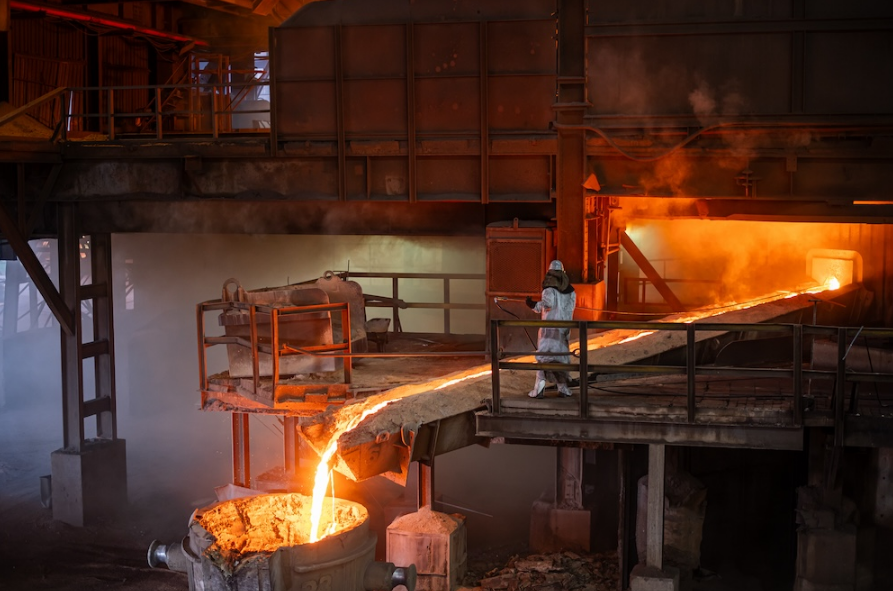
Transalloys warns of job cuts and operational scaling back as energy costs squeeze South Africa’s last manganese smelter. Picture Credit: Mining.com
By Aisha Zardad
eMalahleni – South Africa’s industrial landscape has taken another blow as Transalloys (Pty) Ltd, operator of the country’s last remaining manganese smelter, warns that it may have to cut up to 600 jobs and significantly scale back production due to rising costs and untenable electricity prices.
Based in eMalahleni, a coal-rich town in Mpumalanga east of Johannesburg, Transalloys is a key player in the manganese and ferroalloy processing sector — industries that supply essential materials used in steelmaking and other heavy manufacturing processes. However, the company’s statement to staff reveals a grim reality: surging power costs in South Africa are eroding profit margins and undermining operational viability.
Despite South Africa holding roughly three-quarters of the world’s identified manganese-ore reserves, local processors like Transalloys are struggling to compete with international smelters, especially those in China, where energy costs are dramatically lower. According to CEO Konstantin Sadovnik, electricity expenses in South Africa can be nearly double those faced by competitors abroad — a gap that the company says makes sustainable operation nearly impossible unless costs are addressed.
Already, Transalloys has scaled down to only two operational furnaces out of five, reflecting the financial strain facing its core business. The company has warned employees that, lacking clarity on future power pricing and stability, it may move forward with restructuring plans as early as February, a step that could see significant retrenchments and reduced production levels.
The Transalloys situation does not stand alone. Other ferrochrome producers like Glencore have also shuttered operations due to similar pressures, and labour unions have called attention to the widening impacts of energy costs on manufacturing jobs. Earlier warnings from unions such as Solidarity suggested that other players in related heavy-industry sectors may be forced to cut thousands of jobs as production becomes increasingly uneconomic.
Government has acknowledged the strain on local ferrochrome and processing industries, with cabinet approval granted earlier in the year to explore negotiations on electricity pricing and potentially impose export taxes on chrome ore to bolster local transformation. However, industry stakeholders note that these reforms have yet to be fully fleshed out or implemented, leaving companies like Transalloys in a precarious position.
The possible closure or deep retrenchment at Transalloys highlights broader structural challenges facing South Africa’s industrial base — particularly in sectors heavily dependent on affordable, reliable energy. As the winter months approach and energy demand grows, the stakes for sustaining local processing industries and the jobs they support remain high.