
Timeless Notes
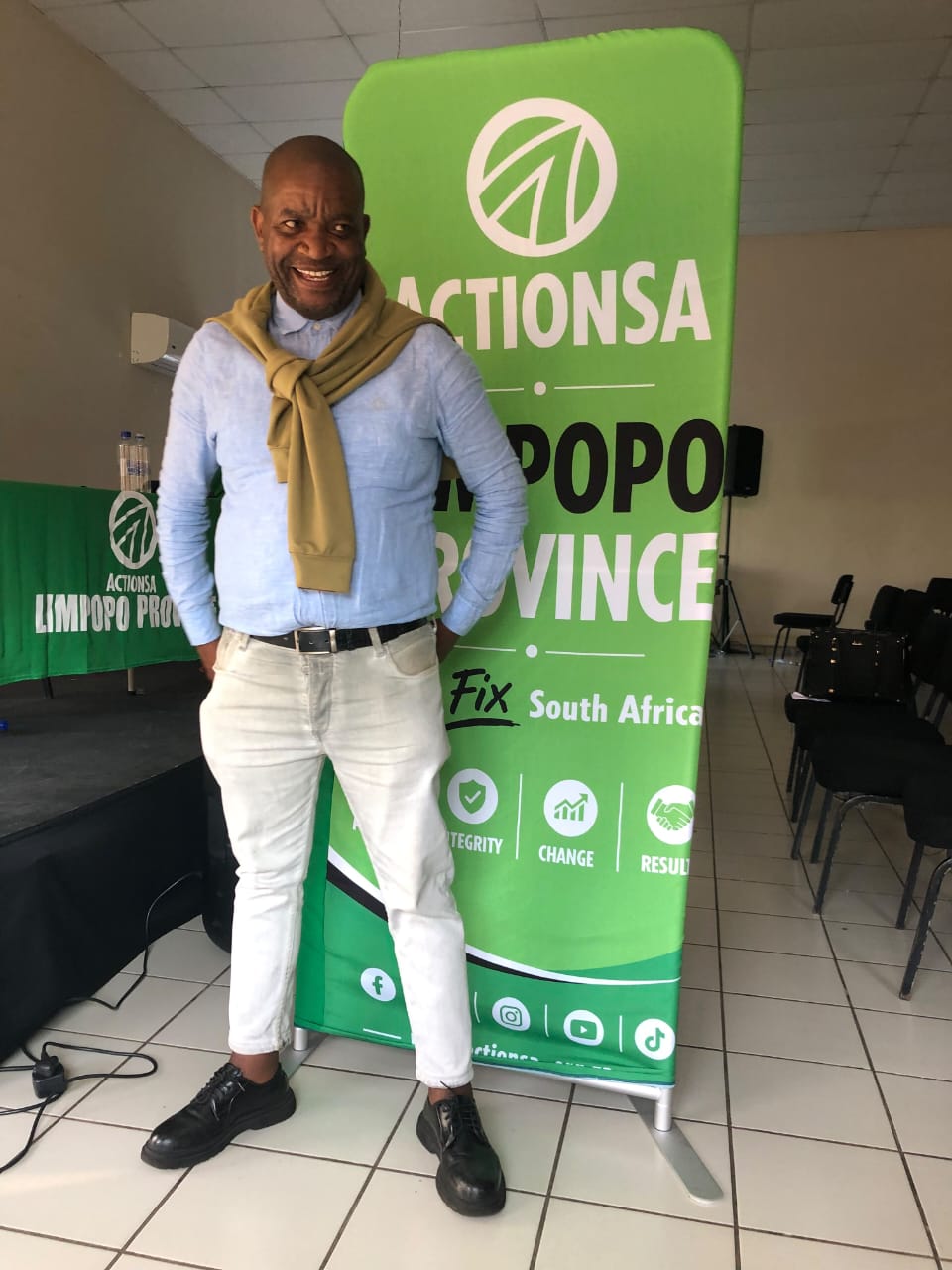
Mr Thulane Madalane. Picture Credit Timeless News
By Thulane Madalane
As we mark the end of Heritage Month today, I want to reflect on Sekhukhuneland — also known as the Sekhukhune District, historically referred to as Bopedi.
The Sekhukhune Region was named after the nineteenth-century paramount king and warrior leader of the Marota empire, King Sekhukhune I. Born around 1814 as the son of King Sekwati I, he ascended to power in September 1861 after a succession struggle against his half-brother, Mampuru II. In 1876, he fought against the South African Republic and its Swazi allies. King Sekhukhune I successfully defended his mountain strongholds, inflicting a humiliating defeat on President Thomas François Burgers’s commando forces.
Burgers, a Boer politician and minister, served as the fourth president of the South African Republic from 1872 to 1877. The present-day town of Burgersfort was named after him, and it grew around a hexagonal military fort built between 1876 and 1877 during the war against the Bapedi nation led by King Sekhukhune I.
Looking closely at the wars King Sekhukhune I fought, they were inspired by a singular desire: to defend his land and his people. Some of his subjects, working in white-owned mines and farms, contributed levies toward purchasing armaments to defend Bapedi land. This was unity in the face of an existential threat — ordinary people, across different circumstances, pooling resources toward one cause.
Consider Shaka Zulu, who in the early nineteenth century forged disparate Nguni clans into a formidable and cohesive Zulu kingdom, one that would go on to resist colonial encroachment more effectively than many of its neighbours precisely because it had first resolved its internal divisions. Contrast this with Rwanda in 1994, where colonial-era ethnic classifications between Hutu and Tutsi — originally administrative categories entrenched by Belgian colonisers — were exploited by political elites to devastating effect, culminating in genocide. It is a stark reminder of how easily external actors can weaponise internal division for their own ends, and how catastrophic the cost can be when a people fail to see through that manipulation in time.
Closer to home, we can look at Basotho unity under King Moshoeshoe I, who built the Basotho nation not through conquest alone but through diplomacy, incorporating diverse groups fleeing the Mfecane wars into a single, resilient polity that successfully negotiated its survival against both Boer and British expansionism. Compare this to the broader pattern of “divide and rule” employed across colonial Africa — from Nigeria’s regionally engineered rivalries to South Africa’s own homeland system, of which Bopedi’s later fragmentation was a part — where colonial and apartheid administrations deliberately entrenched ethnic and regional divisions to prevent unified resistance and to make African societies easier to govern from outside.
These are not abstract lessons. They are blueprints, both cautionary and instructive, for what our region faces today.
Now, time has changed. Today we have leaders who occupy important public and private offices from the Sekhukhune Region, some through party-political tickets, others through their own academic and professional efforts. My question is this: among the present-day crop of leaders, do we have those who can defend the interests of the people of this region the way King Sekhukhune I did against hostile forces seeking to annex this land by hook or crook? Or do we have leaders who shrink in the presence of other leaders from elsewhere in Limpopo and South Africa?
When given positions of power in government through various political parties, do they uplift the very people of Sekhukhune who believed in them before the rest of the country could even pronounce their names? Do they care about the development of downtrodden families who still live below the breadline?
I ask these questions because the people of our beloved Sekhukhune Region need leaders who will defend their unity and their interests, even while climbing the corporate ladder or occupying political office. All political parties, new and old, treat Sekhukhune Region as happy hunting ground for political support — yet when it comes time to make key appointments, Sekhukhune is pushed down the pecking order. The sad truth is that people from other regions in Limpopo, or elsewhere in the country, still dictate who becomes what in Sekhukhune.
When will we emulate the example set by our forebears, like King Sekhukhune I, who stood against colonial hegemony in defence of his land and his people? When will we unite against leaders from elsewhere who divide us by appointing feeble-minded proxies in Sekhukhune to serve their own narrow, selfish interests? When will we own our own destiny as the people of this beautiful region? Or have we bought into the notion that we are somehow children of a lesser god — that people from Seshego are worth more than people from Setlaboswane? What kind of leadership inheritance do we want to leave our children if that is the standard we accept?
As I conclude, I am drawn to Aristotle, the ancient Greek philosopher who famously countered Plato by arguing that true unity does not mean forcing everyone to be identical. Rather, it is a unity in diversity, where different groups of citizens engage in joint political activity to achieve a stable community.
As we march into the future, I say this: we don’t need identical personal goals. We don’t need to belong to the same political party. We don’t need to share the same cultural practices or speak the same language. But let us build a Sekhukhune Region that will stand as a relic of pride for future generations — just as King Sekhukhune I did, his name written in the annals of history as a leader who gallantly defended his people.