
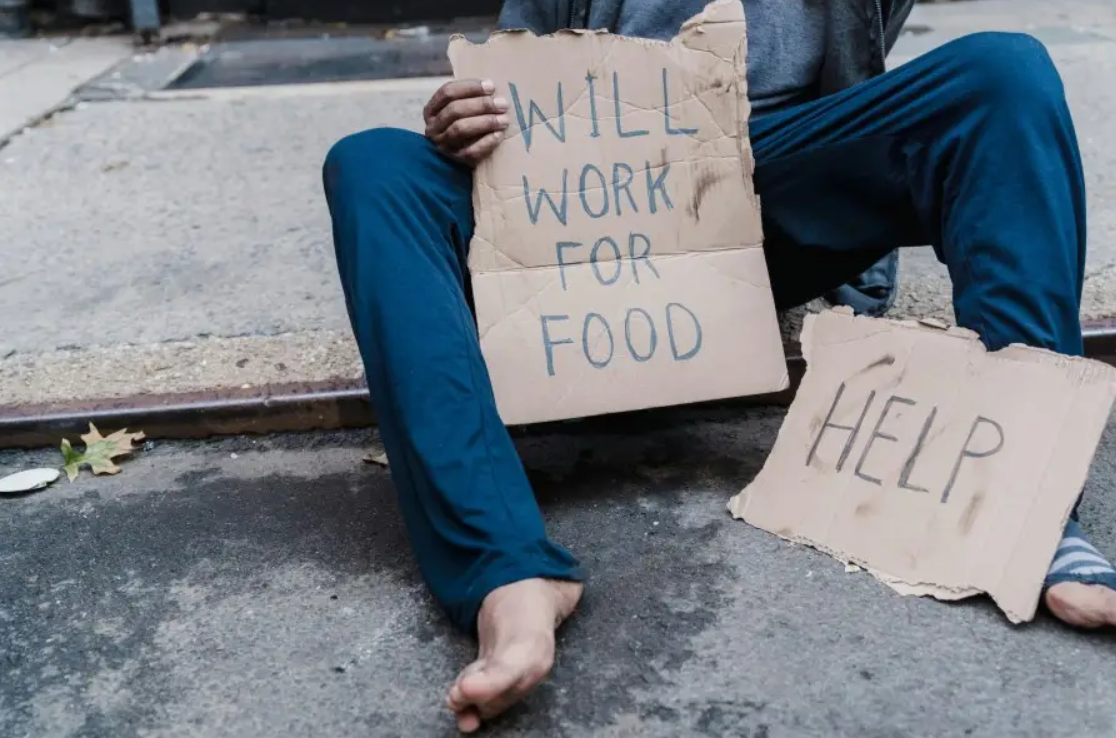
Despite being born free in a democratic South Africa, the country’s youth face high unemployment, limited educational opportunities, and systemic failures that block their access to constitutional rights. Picture Credit: Endpovertynow
By Aisha Zardad
South Africa — As South Africa observes Human Rights Day, the contrast between constitutional promises and the lived reality of young citizens has never been starker. The generation born after apartheid — often called the “born frees” — faces a landscape marked by high unemployment, limited access to quality education, and persistent food insecurity.
Though the Constitution guarantees dignity, education, and basic necessities, these rights often remain out of reach for millions of young South Africans. Among those aged 15 to 34, unemployment rates soar at 57% and 39%, leaving countless young people struggling to find their footing in society.
“Few statistics illustrate the gap between promise and reality more clearly,” says Prof. Linda Meyer. “This isn’t just a labour market issue; it’s a systemic failure affecting a generation.”
For many, the challenges extend beyond jobs. By the end of 2025, nearly one in three young South Africans were neither employed nor in education or training, cutting them off from opportunities to contribute meaningfully to society and creating long-term dependency on unstable support systems.
Education, long seen as a pathway out of poverty, is proving an uneven road. While access to universities has expanded, completion rates tell a worrying story: around 40% of first-year students fail to finish their degrees.
“Access without completion isn’t transformation — it’s a revolving door,” Prof. Meyer warns.
Financial pressures, lack of institutional support, and logistical barriers leave students vulnerable. Hunger is a silent but widespread crisis. Reports from the University of the Western Cape and University of the Free State reveal that nearly two-thirds of students experience food insecurity, often having to choose between meals and transportation, which undermines both academic performance and persistence.
Central to this struggle is the mismanaged National Student Financial Aid Scheme (NSFAS). Intended to help students in need, it has become a symbol of institutional failure. Billions earmarked for student accommodation remain unaccounted for, leaving learners without crucial support.
“Chronic leadership instability at NSFAS, dysfunctional ICT systems, and inadequate oversight from the Department of Higher Education have compounded these failures year after year,” Prof. Meyer asserts. The resulting instability denies young people not only financial support but also the momentum necessary to forge ahead in their education and careers.
Human Rights Day should be more than a symbolic event. It should be a call to action — a reminder that the rights guaranteed on paper must translate into tangible opportunities for South Africa’s youth.
The “born frees” were promised a future in a democratic nation, yet many remain trapped by economic hardship, systemic failure, and broken institutions. For this generation, the promise of democracy has yet to become a reality.