
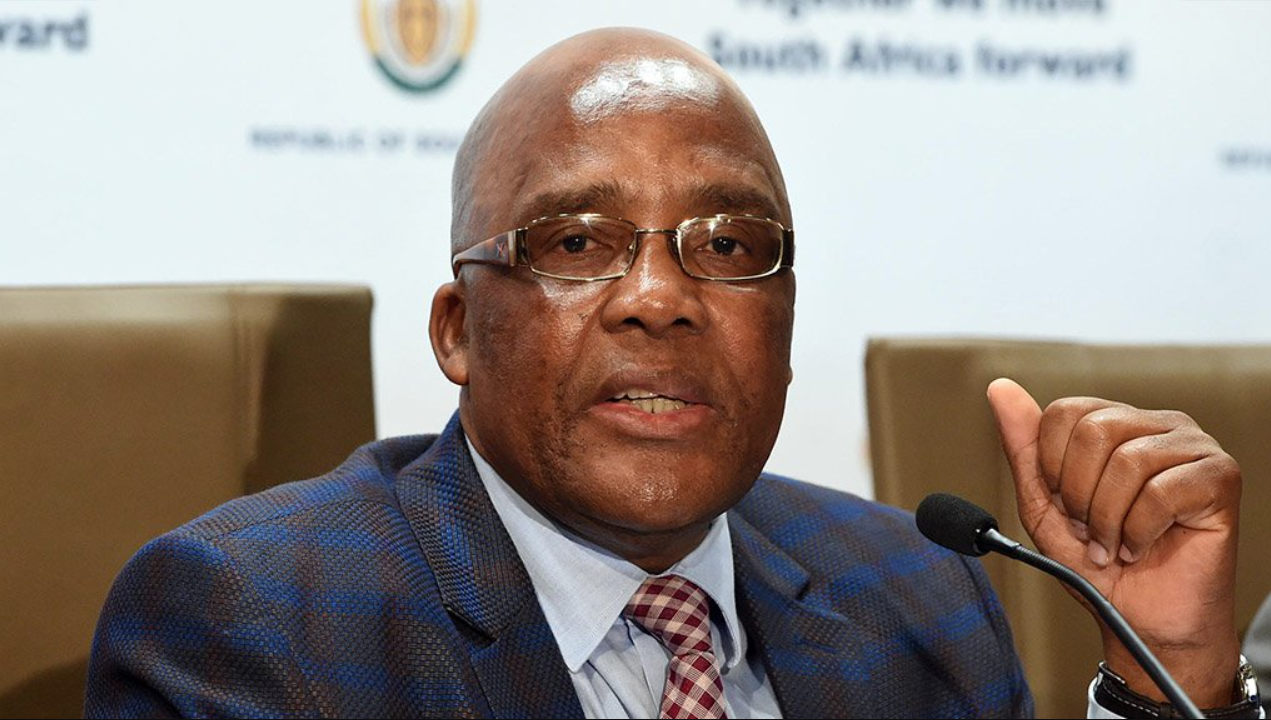
Health Minister Aaron Motsoaledi says South Africa’s healthcare system continues to treat foreign patients with limited resources, stressing that emergency care cannot be denied regardless of nationality. Picture Credit: Polity.org.za
By Aisha Zardad
South Africa – Health Minister Aaron Motsoaledi has acknowledged the strain on South Africa’s healthcare system as hospitals and clinics continue to treat patients from other provinces and neighbouring countries despite limited resources.
Responding to questions in Parliament on Wednesday, Motsoaledi said the Department of Health assists foreign nationals within the constraints of its budget, noting that the country’s constitutional protections require that emergency medical treatment be provided regardless of nationality or ability to pay.
He explained that patients generally enter the system through two channels. Some are officially referred from another province or from neighbouring countries. In these cases, the receiving hospital invoices the referring authority for the treatment provided, whether the case is an emergency or a scheduled admission.
Others arrive independently at healthcare facilities. These patients are assessed using the Uniform Patient Fee Schedule (UPFS), a means-testing system used to determine whether they should pay for services and how much they are required to contribute.
“This is a very tricky situation, because many patients who come on their own from neighbouring countries, the countries argue that they never sent anybody, and so you can’t hold them liable because they are not even aware that the person has crossed the border.
“The patients themselves must settle the bill, but you also have Section 27(3) of the Constitution. That says no one may be refused emergency medical treatment. And it’s only a doctor who can determine whether the person is an emergency or not. And if they determine that it’s not an emergency, the patient must pay,” Motsoaledi said.
He noted that in practice, recovering these costs is often difficult.
“Unfortunately, this is just theoretical because most of the time, they give the wrong names. They give wrong addresses; they can never be traced.
“And the problem is exacerbated by the fact that, unfortunately, the truth is that many people from our neighbouring countries believe everything is free in South Africa at all levels of care at every hospital, perhaps except in private.”
Motsoaledi added that clinics operate differently because primary healthcare services are free, meaning patients are not subject to a means test when they arrive.
On how the department supports people from neighbouring countries seeking treatment, he said the health system attempts to assist as many patients as possible within existing constraints.
“We accommodate them with the little we have because the Health Department cannot increase its own budget… But we tend to deal with what we have to help everybody. Whatever we have, whatever amount of medicines we have, we share with them in the way we can,” he said.
The minister also pointed to challenges related to documentation, saying some patients arrive without proper identification or use incorrect details.
“Our solution to this problem is a new system which has been designed for the past eight years by the Centre for Scientific and Industrial Research, which is called the Health Patient Record Registration System, which is linked to Home Affairs, which is going to register all of you. Every South African, as I am speaking, millions are already registered on that,” Motsoaledi said.
When asked whether foreign nationals receiving treatment should be handed over to immigration authorities, the minister said it was not the responsibility of healthcare workers to determine a person’s legal status. “You can’t hand over a person and say this one is illegal. This one is not. It’s not our job. It’s not the job of health workers because where will human beings go when they’re in trouble?” he said.
Motsoaledi also addressed concerns about the use of Section 27(3) of the Constitution, which guarantees emergency medical care.
“No doctor can do that, and in fact, before you even find out who they are, you would’ve helped them,” he said. “Anybody who has an emergency, we will help them, and you ask the questions later. I think that is what ubuntu is all about. It’s not necessarily the Constitution. It is ubuntu. That a human being who’s dying needs help.”