
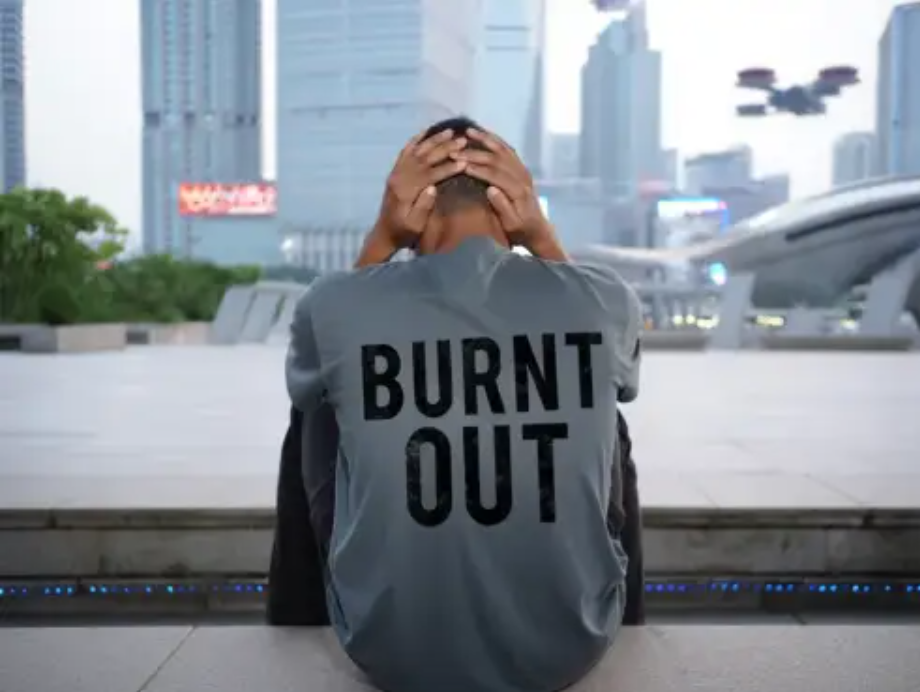
Not everything is burnout. Sometimes you’re just avoiding the thing that feels uncomfortable. And that avoidance? It’s exhausting.Picture Credit: Saastr
By Aisha Zardad
Burnout has become one of the most widely used explanations for exhaustion. When energy is low, focus is scattered, and motivation disappears, it is natural to assume that the cause is overwork or stress. And in many cases, that is true. Burnout is real, and it deserves to be taken seriously.
But there is another, less comfortable truth that often goes unexamined: sometimes what feels like burnout is actually avoidance.
This is not about dismissing your fatigue or minimizing your experience. It is about looking more closely at what is happening beneath the surface. Not all exhaustion comes from doing too much. Sometimes it comes from resisting something that requires your attention.
Avoidance is not always obvious. It rarely appears as a conscious decision to ignore a task or responsibility. Instead, it shows up in subtle ways — procrastination, constant distraction, low-level fatigue, or the feeling of being busy without making meaningful progress.
You might notice yourself scrolling through your phone instead of starting something important. You may reorganize small tasks repeatedly while postponing the one thing that actually matters. You may feel mentally drained before even beginning a task, simply because you are anticipating discomfort.
This kind of exhaustion is different from burnout.
Burnout is often the result of sustained effort without adequate rest or support. It builds over time and affects multiple areas of life. Avoidance-related fatigue, on the other hand, is often tied to specific tasks, decisions, or situations that feel uncomfortable, uncertain, or emotionally charged.
The discomfort may come from different sources. It could be fear of failure — the worry that you might not meet your own expectations. It could be fear of success — the pressure that comes with stepping into something bigger. It could be uncertainty — not knowing where to start or how things will unfold. It could even be boredom or lack of alignment — a sign that the task itself does not feel meaningful.
When the mind encounters this kind of discomfort, it often looks for ways to escape it. Distraction becomes easier than engagement. Delay feels safer than action.
Over time, this pattern creates a sense of mental heaviness. The task remains unfinished, the decision remains unmade, and the underlying tension continues to build. This is where the feeling of “burnout” can become confusing. You feel tired, but not necessarily from overexertion. You feel stuck, but not necessarily from lack of ability.
You are carrying the weight of avoidance. Recognizing this distinction is not about judgment. It is about clarity.
When you understand that avoidance may be contributing to your exhaustion, you gain the ability to respond differently. Instead of assuming that rest alone will solve the problem, you can begin exploring what you might be resisting.
One of the most effective ways to approach this is through gentle honesty. Ask yourself: What am I currently avoiding?
The answer may not always be obvious at first. It might be a conversation you have been putting off, a decision you have been delaying, or a task that feels overwhelming. It might even be an internal process — acknowledging a feeling, confronting a belief, or making a change you have been hesitant to face.
Once you identify what you are avoiding, the next step is not to force yourself into immediate, intense action. That often increases resistance. Instead, focus on reducing the barrier to entry.
Break the task into the smallest possible step. If it is a conversation, it might begin with writing down what you want to say. If it is a project, it might start with opening the document or outlining a single idea. If it is a decision, it might involve gathering information rather than committing to a final choice.
These small actions help shift you from avoidance into engagement.
Something important happens when you take that first step. The mental weight begins to lift. The task becomes more defined, less abstract. What once felt overwhelming starts to feel manageable.
This does not mean the discomfort disappears entirely. But it becomes something you can work with rather than something you are avoiding.
It is also important to approach yourself with compassion during this process. Avoidance often develops as a protective mechanism. The mind is trying to shield you from perceived difficulty or risk. Recognizing this allows you to respond with understanding rather than frustration.
At the same time, growth requires moving beyond that protection when it no longer serves you.
There will still be moments when rest is genuinely needed. Burnout is real, and recovery is essential. But there will also be moments when what you need is not more rest, but more clarity and gentle action.
Learning to distinguish between the two is a powerful form of self-awareness.
Today invites you to pause and look honestly at your experience. If you feel exhausted, ask yourself not only how much you have been doing, but also what you may be avoiding.
Because sometimes, the path forward is not about stepping back.
It is about finally stepping into the thing you have been postponing.
Practice for Today
Take a moment to identify one task, decision, or situation you have been avoiding.
Write it down clearly.
Then break it into the smallest possible step you can take today.
Commit to completing just that step — nothing more.
Notice how taking action affects your energy and mental clarity.
Today’s Reflection
When I feel “burnt out,” what patterns do I notice in my behaviour?
Am I consistently overworking, or am I delaying certain tasks or decisions?
What is one thing I may be avoiding right now?
What emotions or fears might be connected to this avoidance?
How does postponing this task affect my energy and mental state over time?
What small step can I take today to move from avoidance into action?
Not all exhaustion comes from doing too much.
Sometimes it comes from not doing the thing that matters most.