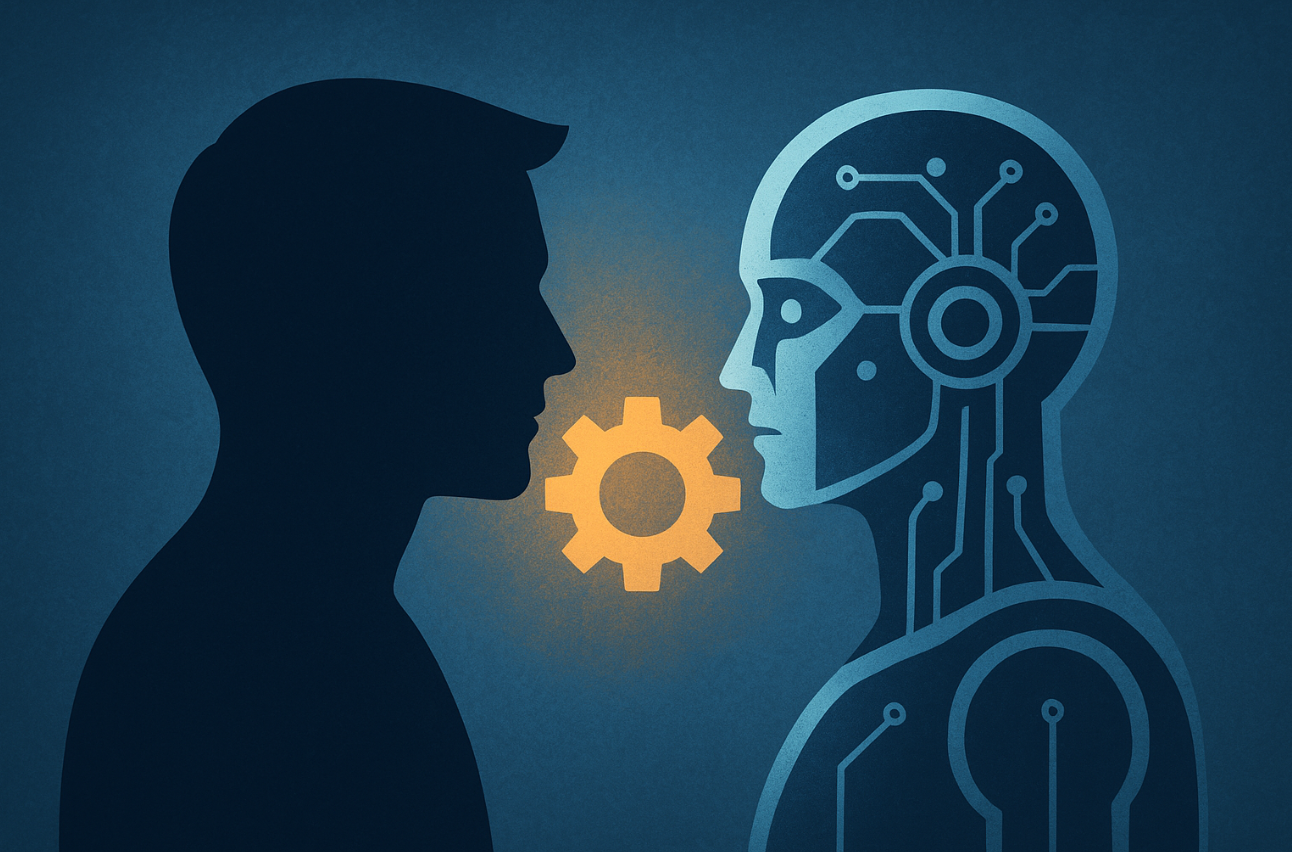
While AI can assist with many tasks, professions that require empathy, creativity, and human judgment remain uniquely human. Picture Credit: solvex-solutions.com
By Aisha Zardad
South Africa – Artificial intelligence is transforming workplaces at lightning speed, automating tasks that once required entire teams. From writing reports and analysing data to generating images and answering customer queries, AI seems capable of almost anything.
Yet experts warn that many roles still demand a human touch— skills that AI cannot easily emulate, such as understanding emotions, generating truly original ideas, making complex decisions, and solving hands-on challenges.
Care-Based Jobs: Roles in healthcare and social support—like nurses, therapists, social workers, and childcare providers—rely on emotional understanding and genuine compassion. While AI apps can assist with mental health or routine care, they cannot replace the nuanced empathy that humans provide.
Skilled Trades: Electricians, plumbers, carpenters, and mechanics operate in unpredictable, ever-changing environments. While robots perform well in controlled factory settings, navigating real-world problems demands dexterity, adaptability, and practical intuition—abilities machines still cannot match.
Creative Careers: AI can generate artwork, music, and written content, but authentic creativity stems from lived experiences, emotions, and cultural context. Designers, filmmakers, journalists, and artists offer perspectives and storytelling that AI can mimic but not originate.
Teaching: Teaching goes beyond delivering facts. Educators inspire, adapt to each student’s needs, and foster critical thinking—human elements that AI cannot truly automate.
While AI reshapes the workplace, it cannot replace the human touch. The future belongs to collaboration, where people harness technology to enhance, not supplant, the skills machines cannot replicate.