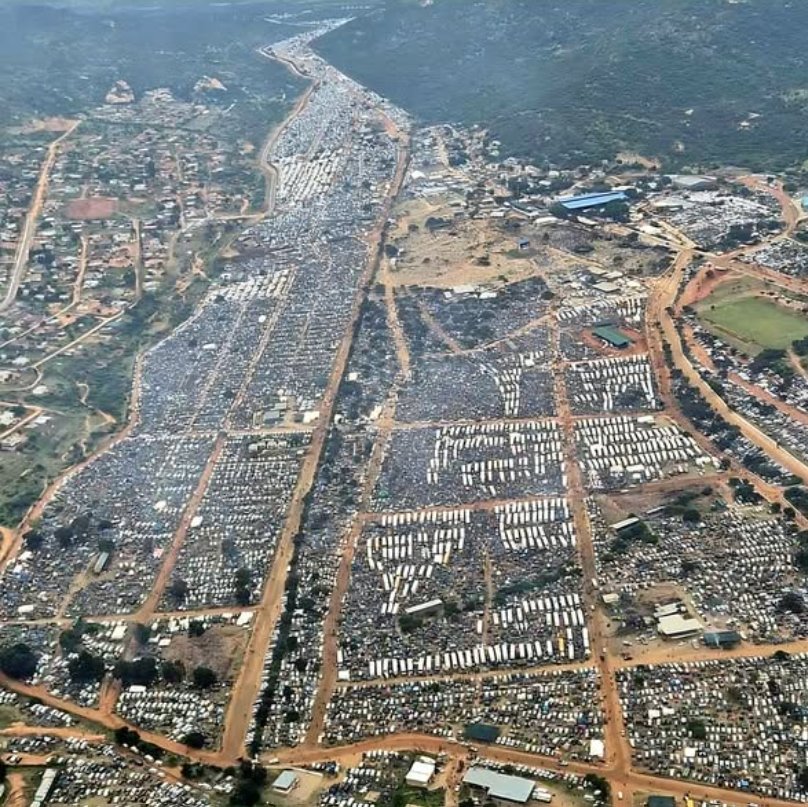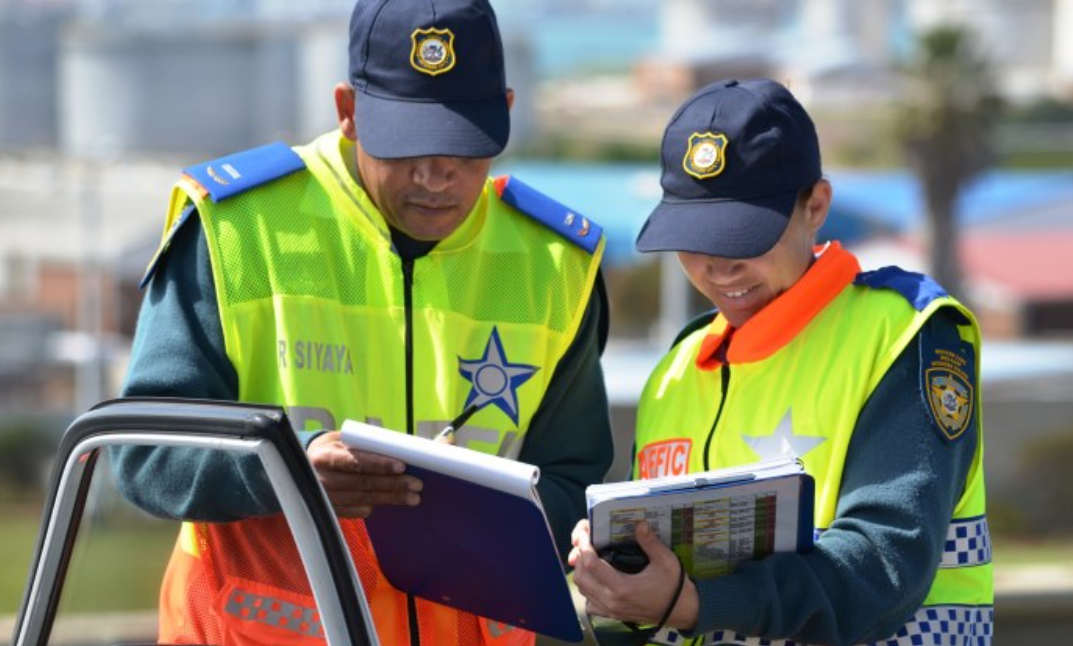
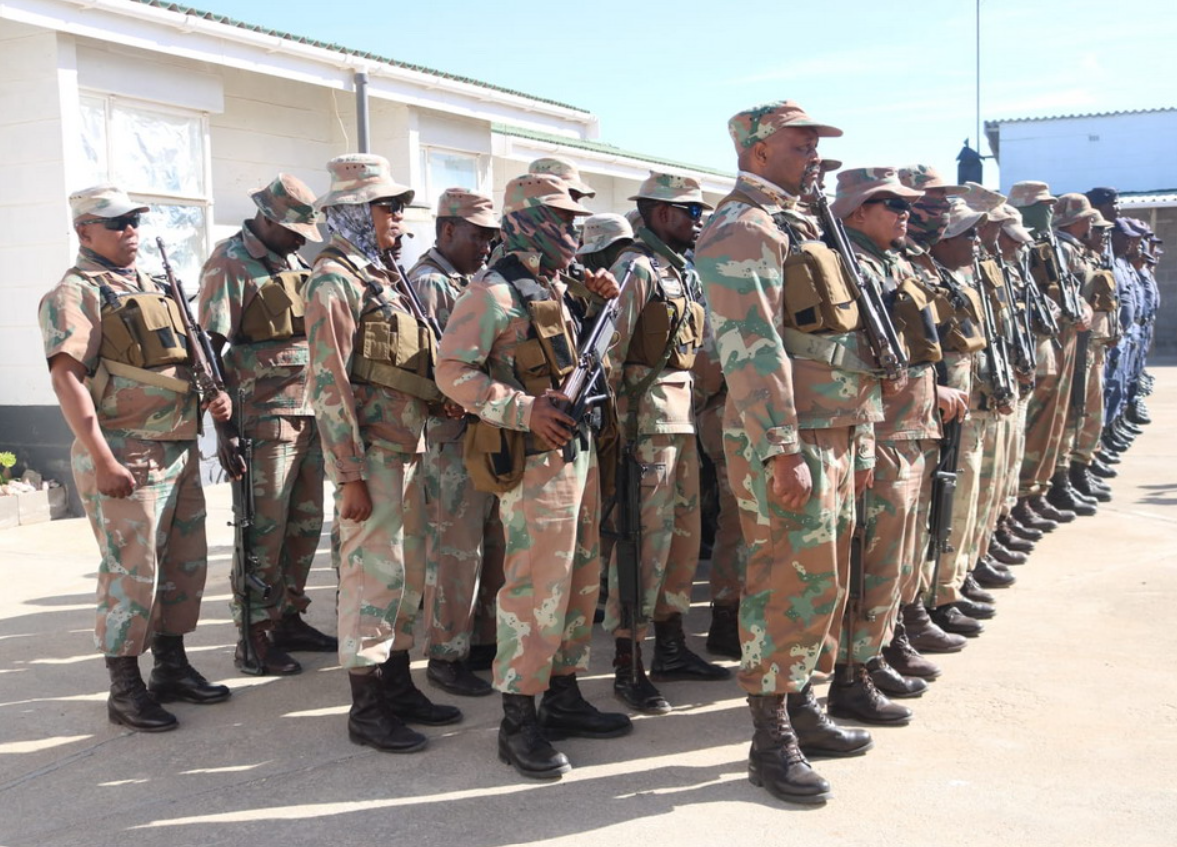
SANDF stands ready to support SAPS in targeted operations against gangs and illegal mining. Deployment begins March 2026 to stabilise hotspots and assist in dismantling organised crime syndicates. Picture Credit: Defenceweb
By Aisha Zardad
South Africa – The Acting Minister of Police, Firoz Cachalia, has outlined plans for the South African National Defence Force (SANDF) to assist the South African Police Service (SAPS) in combating gang activity and illegal mining in key hotspots across the country. The deployment is scheduled to start on 1 March 2026 and continue until 31 March 2027, following completion of specialised training for personnel.
Cachalia, together with National Police Commissioner General Fannie Masemola, briefed a joint meeting of the Portfolio Committees on Police and Mineral and Petroleum Resources on the operational plans. The deployment is authorised under Section 201(2)(a) of the Constitution and Section 19(3)(c)(ii) of the Defence Act, and will focus on selected provinces rather than a nationwide rollout. Hotspots have been identified in the Western Cape, Eastern Cape, Gauteng, North West, and Free State.
Each agency will maintain its own command structure, with operations coordinated through Joint Operational and Intelligence Structures (JOINTS) at national, provincial, and local levels. Designated commanders from both SAPS and SANDF will work together to ensure aligned strategy and effective collaboration, with progress tracked under Project Management processes as part of the National Organised Crime Combating Operation, “Ukubuza.”
Masemola explained that deployment is scheduled to begin on 1 March 2026 and continue until 31 March 2027, but the full rollout will only proceed once training is complete and the SANDF personnel are deemed ready, with operations expected to reach full capacity from April onwards. “The deployment of the SANDF is there to stabilise the areas, while the rest of the SAPS teams will be dealing with organised crime, with a view to dismantling those organised crime syndicates,” he explained. Specialised units, including the NIU Special Task Force, will be involved to ensure that local police stations are not left short-staffed. On the ground, SAPS will retain overall authority, while the SANDF provides support and stabilisation.
The cost of the SANDF deployment has not yet been determined, but Finance Minister Enoch Godongwana noted that funding will be managed under Section 16 of the Public Finance Management Act, which allows for emergency expenditure. SAPS will continue to use part of the R1 billion allocated to combat organised crime, while SANDF operations will draw from their own budget.
Cachalia emphasised that the army’s involvement is not a cure-all. “The deployment of the army is a stabilisation strategy to create space for the implementation of an organised crime strategy that was adopted by the Cabinet about a month ago. It’s in the process of being implemented,” he said. Operational security limits the level of detail that can be shared publicly, as revealing sensitive information could be exploited by criminals.
Reflecting on previous SANDF-SAPS operations, Cachalia said the goal is to enhance police capabilities rather than replace them. “It is not so much just a boots-on-the-ground approach by flooding communities with soldiers and so forth, because those will increase the risks of unintended consequences,” he said.
Cachalia concluded with a firm warning to criminals operating in gang and illegal mining areas. “They have to assume the consequences of confronting the police and the army because they are causing untold misery. They are not simply making money; they are harming our people, they are killing young children. They are making it impossible for communities to live,” he said.