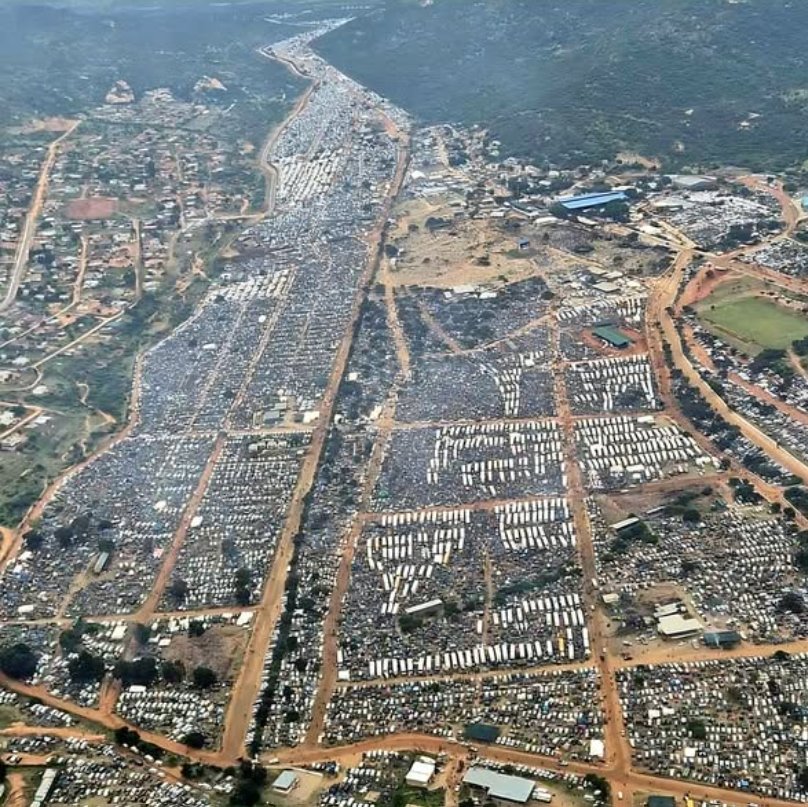
OUTA’s report highlights governance, procurement, and accreditation issues in NSFAS-funded student accommodation, raising concerns about the stability and safety of housing for thousands of students. Picture Credit: Insideeducation
By Aisha Zardad
South Africa – The Organisation Undoing Tax Abuse (OUTA) has published a report highlighting serious concerns over the management of billions of rand allocated to student accommodation by the National Student Financial Aid Scheme (NSFAS).
The report follows a two-year investigation into governance, procurement, and the standards of student housing across South African universities. OUTA says its findings build on a previous investigation from December 2023 and include new evidence obtained through the Promotion of Access to Information Act (PAIA) and whistleblower disclosures.
According to OUTA, recent structural changes to the NSFAS accommodation system introduced multiple intermediaries into the funding chain. This complexity, the organisation warns, has increased the risk of inefficiency, mismanagement, and abuse.
“There were already accommodation placement systems operating successfully at many universities,” said Stefanie Fick, OUTA’s Executive Director of Accountability. “Instead of building on those systems, NSFAS introduced a new portal and outsourced critical functions to external service providers and accreditation agents.”
The report highlights weaknesses in the accreditation process. In some cases, properties were approved without proper inspection, with some listed as offering hundreds of beds while in reality they were small houses.
“If agents are certifying properties without proper inspections, the reliability of the entire accommodation system must be questioned,” said Rudie Heyneke, OUTA’s Senior Project Manager.
Procurement processes for companies managing the NSFAS portal also raised red flags. OUTA noted that the NSFAS board appointed four solution providers, despite the evaluation committee recommending only two. One company, Training Young Minds, had initially been disqualified but was later reinstated. “If an evaluation committee recommends one outcome and a different one is implemented, there must be transparency and justification for that decision,” Heyneke said.
Financial arrangements within the system were also scrutinised. NSFAS reportedly deducts 5% from accommodation rental payments before distributing the remaining funds to providers, introducing multiple financial interests into what should be a student-focused system.
“Where public funds move through several intermediaries, strong transparency and oversight are essential,” Heyneke added.
OUTA also questioned long-term lease agreements introduced during the tenure of former NSFAS CEO Andile Nongogo and board chair Ernest Khosa, noting that documentation supporting the development of these agreements was not produced.
“If long-term leases were pursued without proper planning or oversight, that would be a serious governance failure,” Fick said.
Discrepancies were also found in the number of accredited accommodation beds. In some cases, institutions had more accredited beds than were actually funded, raising concerns about whether students were being destabilised or if resources were being misallocated.
“If sufficient accredited beds exist but are not funded, students are being destabilised unnecessarily,” said Heyneke. “Or is money being allocated to beds that only exist on paper?”
While most accommodation providers meet minimum standards set by the Department of Higher Education and Training (DHET), OUTA stressed that the governance framework itself requires urgent reform.
“A funded student should never start the academic year unsure where they will sleep,” Fick said. “Student accommodation funding must deliver beds and stability. If the system creates confusion and opportunities for abuse, it must be fixed.”
OUTA is calling for a full audit and physical inspection of the properties identified in the report and plans to share its findings with the NSFAS board, the Auditor-General of South Africa, and the Special Investigating Unit (SIU), which is already investigating aspects of NSFAS operations.
NSFAS has acknowledged the OUTA report and said it will review the findings carefully. The scheme emphasised that it has been working with OUTA and providing information via PAIA requests to promote transparency.
“NSFAS is fully committed to continuous improvement,” the organisation said. “Relevant recommendations from OUTA’s report will be integrated into our broader strategy for student accommodation management.”
The scheme said reforms are already underway following a legal and forensic review, including a move to direct payments to accommodation providers, reducing reliance on solution partners. Phased implementation of this system will continue throughout 2026.
NSFAS also confirmed that the SIU is investigating student accommodation under a Presidential Proclamation and that it is cooperating fully with the inquiry. A national audit of student accommodation accreditation has been initiated for 2026.
For the 2026 academic year, NSFAS introduced new controls to improve student registration, placement in accredited accommodation, and timely payments to providers. The scheme reported that placements for the year have been relatively smooth.
NSFAS stressed that any student, provider, or staff member found to have defrauded the scheme would face appropriate consequences.
“The consequences of instability within the accommodation system are felt most directly by students,” Fick said. “Students deserve stability and safety. Taxpayers deserve accountability. The NSFAS student accommodation system requires urgent reform.”