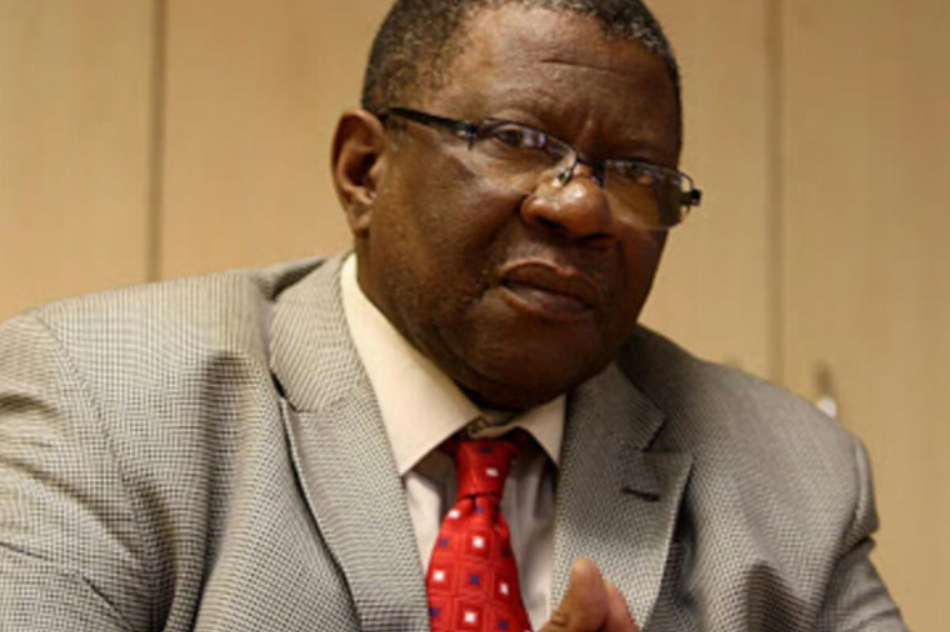
Joe Latakgomo, former Press Council Public Advocate, is remembered as a fearless journalist whose legacy shaped South Africa’s media landscape. Picture Credit: MSN
By Staff Reporter
South Africa – The Press Council of South Africa has expressed deep sadness at the passing of one of the country’s most respected media figures, Joe Latakgomo, who died on Sunday. Latakgomo served as Public Advocate of the Press Council from 2018 to 2020, bringing with him more than five decades of distinguished service in journalism.
His remarkable career included being the founding editor of the Sowetan in 1981. Before that, he was a stalwart at The World and Weekend World, both banned by the apartheid regime, and served as Assistant Editor at the Post and Sunday Post. He later became Assistant Editor of The Star and Assistant Editor of the Argus Africa News Service, before taking up the role of Public Editor at Avusa (Times Media).
Writing in October 2020 to mark the 43rd anniversary of Black Wednesday, The Star’s sub-editor Nhlanhla Mbatha reflected on Latakgomo’s leadership during one of the darkest periods in South Africa’s history. Mbatha recalled how Latakgomo’s editor at The World, Percy Qoboza, “was detained in a world headline-grabbing spectacle in the newspaper’s office (on 19 October 1977) … and had become a symbol of press freedom.” Latakgomo effectively stepped in to lead.
Mbatha wrote: “In yesteryear politics, Nelson Mandela was the face of the ANC from the prison walls while Oliver Tambo was keeping the fires burning in exile. I draw parallels and dare say that if Qoboza was the Mandela of the press, Latakgomo must have been the Tambo of the Fourth Estate.”
Press Council member and veteran journalist Joe Thloloe described Latakgomo as “a journalist’s journalist” and a hero of steadfast reporting during the most turbulent years of apartheid.
“He would go out to do the reporting, come back to the office, pick up the dummy pages, design and lay them out for the printer.
“But what is never brought out to the fore is that he was running The World as Editor when Soweto drew the line in the sand in 1976. Percy, who got the honours for this, was out of the country on a Nieman Fellowship that year. Joe shepherded the young Willie Bokabas and the Sam Nzimas as they recorded the story of 1976.
“Joe wasn’t imprisoned like the rest of us that year, but South Africa carries the imprint of his foot. May his soul rest in peace and condolences to all his family and friends.”
Latakgomo’s voice was equally powerful beyond the newsroom. In his 1997 submission to the Truth and Reconciliation Commission, he detailed the harassment journalists endured under apartheid, including the deliberate spread of disinformation and the surveillance of newsroom telephones.
“Sometimes we got telephone calls, people telling us what was happening. But we knew our telephones were being bugged. If we got a call like that and published it, it could be somebody sitting in security headquarters giving the impression he was from Tanzania or Lusaka, giving you disinformation and you would end up publishing what would eventually be untrue information and they would prove that you published false information and therefore discredit you forever.
“So, we were very careful about that. Therefore, it inhibited us in terms of what we could publish. Of course, there was also the danger that once somebody called you, I don’t know the number of times that, while you were talking to a contact, somebody would interrupt and in a very famous kind of way would say: ‘Julle praat maar kak, man.’”
When asked by the panel whether it was the police listening in, Latakgomo replied:
“Yes. He would lose it and probably suddenly regret having done this. I don’t know how many people have had that kind of experience, and I bet you it will be hundreds of people. It was either arrogance about it or they were particularly dumb.”
His journalism extended beyond South Africa’s borders. He worked extensively on the continent with the Argus Africa News Service and also reported in the United Kingdom, Canada, Japan and Hungary. In 1991, he was awarded the prestigious Nieman Fellowship at Harvard University.
Latakgomo was also widely remembered for his passion for football. He was inducted into the SAB Sports Journalists Hall of Fame in 2009 and received a Lifetime Achievement Award from the South African Football Association in 2011. His book, Mzansi Magic, Struggle, Betrayal & Glory: The Story of South African Soccer, was published in 2010. In 1996, he wrote the accompanying text for global icon Peter Magubane’s photographic commemoration, June 16, Never, Never Again.
Khanyi Ndaweni, Case Manager at the Office of the Press Council, who worked closely with Latakgomo, said “he stood out as a kind and caring colleague who treated everyone with respect and warmth, and will be greatly missed.”
Executive Director of the Press Council Phathiswa Magopeni said: “We mourn the passing of Joe Latakgomo, whose voice as Public Advocate of the Press Council of South Africa carried both courage and conscience.
“He understood that robust, independent media accountability is the lifeblood of democracy.
“We honour and celebrate his contribution to strengthening the credibility, integrity, and public trust in our media accountability and oversight system.”
Current Public Advocate Thabo Leshilo described Latakgomo as a mentor to many in the generation that followed.
“Bra Joe’s mastery of this craft and his fearless in speaking truth to the power of the apartheid regime played an important part in inspiring some of us to joint this noble craft.”
In a 2010 Media Freedom Day speech, Latakgomo’s words captured the enduring responsibility of the press:
“The responsibility of the media is to report what citizens or government, or both may not want to hear, as well as what they do want to hear. Newspapers dare not sanitise the news and thereby play God … and exclude news that may be perceived to be detrimental to the government or the ruling party.
“No doubt, we sometimes see our private picture of the world as the whole truth and nothing but the truth. For this reason, we want to demand everyone to see the world the way we see it.
“Freedom of the media means for us to say what we want to say and what we want to believe. This is enshrined in the Constitution.”
The Press Council conveys its deepest sympathies to his wife, Angie Latakgomo, the Latakgomo family, and to Bra Joe’s friends and former colleagues. His contribution to South African journalism will be remembered for generations to come.