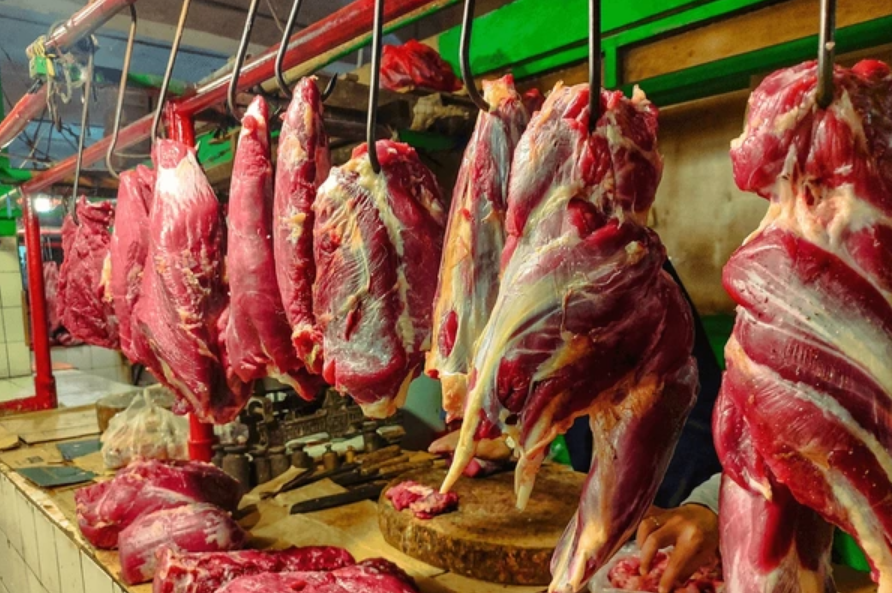
Beef and pork prices are climbing sharply, with the Foot-and-Mouth outbreak driving meat inflation to multi-year highs. Picture Credit: Shutterstock
By Aisha Zardad
South Africa – South Africa’s headline inflation may have eased slightly in January, but consumers are facing renewed pressure at the checkout as beef and pork prices climbed to multi-year highs in the wake of the Foot-and-Mouth Disease outbreak.
Data released by Statistics South Africa (StatsSA) showed headline consumer inflation slowed slightly to 3.5% in January from 3.6% in December 2025, returning to its November level.
Nolan Wapenaar, head of fixed income and co-chief investment officer at Anchor Capital, described the latest inflation reading as broadly contained.
“This inflation print remains comfortably within the SA Reserve Bank’s (Sarb) target band, with pressure concentrated in administered prices and services rather than broad-based goods inflation,” he said. “Overall, a relatively uneventful print.”
Relief at the fuel pumps — with petrol prices falling 3.1% month-on-month — and moderating cereal costs helped contain overall price growth. However, these gains were offset by a sharp acceleration in meat inflation.
The annual inflation rate for meat climbed to 13.5% in January, up from 12.6% in December, marking the highest level since December 2017, when it reached 13.9%.
According to StatsSA chief director of price statistics Patrick Kelly, three beef products recorded the highest annual increases among all 391 items tracked in the consumer price index (CPI) basket.
“Three beef products recorded the highest annual rates of all 391 products in the CPI basket. These were beef steak rising by 31.2%, stewing beef up to 30.3% and beef mince at 28%,” Kelly said.
Even more affordable cuts were caught in the surge. Beef offal inflation quickened to 17.2% from 10.5% in December, while pork prices spiked to 19.5%, up sharply from 11.5% a month earlier.
The surge in meat prices stands in contrast to broader food inflation, which held steady at 4.4% for a third consecutive month as several other categories showed easing pressures.
Despite the softer overall inflation reading, economists caution that rising meat prices pose a significant risk to the outlook, as the ongoing Foot-and-Mouth Disease outbreak continues to strain supply chains.
Dr Elna Moolman, head of South Africa macroeconomic research at Standard Bank Group, said that while overall inflation pressures remain contained, biosecurity challenges continue to cloud the outlook.
“Foot-and-Mouth Disease poses a risk to meat prices, although there seems to be encouraging progress with procuring vaccines,” she said.
Government has announced that the first batch of one million high-potency vaccine doses from Biogénesis Bagó in Argentina is scheduled to arrive in South Africa this weekend, with a further five million doses expected in March as part of a broader agreement.
Economists at Nedbank expect food inflation to remain elevated in the near term, largely driven by meat prices linked to the outbreak. They forecast inflation will trend moderately higher over the next two months, peaking at around 3.7%, before easing later in the year.
“Progress in the vaccination rollout has been slow amid medication shortages, and as a result, meat inflation is only expected to fall back to single digits by around May. Nonetheless, lower global food prices and strong domestic crop production will help cushion the impact,” they said.
Overall, Nedbank expects inflation to average 3.4% in 2026 before declining to 3.1% in 2027. The bank anticipates that the benign inflation outlook, together with subdued economic growth, could persuade the South African Reserve Bank to resume cutting interest rates in the second quarter. It forecasts two 25-basis-point repo rate cuts in May and July, bringing the rate down from 6.75% to 6.25%.
Meanwhile, FNB senior economist Koketso Mano expects headline inflation to ease further to around 3.2% in February, supported by additional fuel price cuts. However, she cautioned that food inflation remains volatile due to ongoing biosecurity risks, including Foot-and-Mouth Disease and African swine fever.
“We think food inflation still presents volatility risk as biosecurity issues continue to impact the agricultural market,” Mano said, noting that softer cereal prices and continued weakness in vegetable prices could help offset some of the pressure.