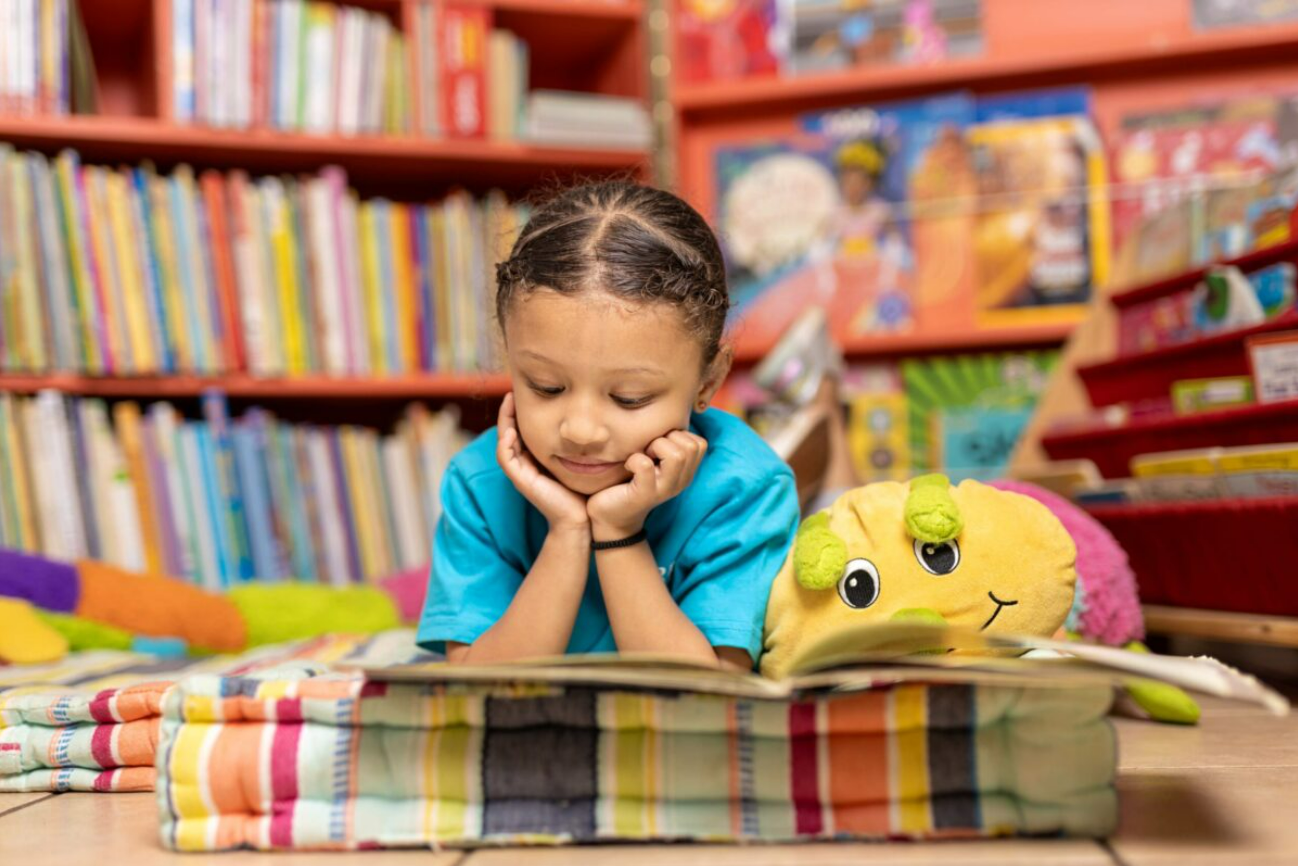
New research reveals most Grade 1 to 3 pupils in South Africa are struggling with basic reading skills, raising concerns about long-term educational outcomes. Picture Credit: Child Magazine
By Aisha Zardad
South Africa – Fewer than one in three Grade 1 to 3 pupils in South Africa read at the required level in their home language, according to the latest Funda Uphumelele survey. The study assessed more than 27,000 pupils across 710 schools nationwide, revealing that most children in the early grades are struggling with basic reading skills.
Speaking at the uMlambo Foundation reading panel conference in Melrose Arch, Johannesburg, on Tuesday, Basic Education Minister Siviwe Gwarube said learning gaps start in the first years of schooling, when children are still learning to recognise letters, connect sounds and read simple sentences.
“The survey gives government a clearer picture of where children are falling behind. It shows specific weaknesses in areas such as letter-sound recognition and oral reading fluency,” she said.
Even though the Medium-Term Development Plan (MTDP) no longer includes reading targets, Gwarube said this does not mean reading has been pushed aside. Instead, reform plans have been put in place to focus on fixing the system.
She said the government has committed R10 billion to support early childhood development (ECD) centres across the country. Through an outcomes-based fund, a further R496 million will be used to create 115,000 new ECD spaces in Limpopo, Eastern Cape, and KwaZulu-Natal.
The department is also introducing reforms in the early grades, including a national support package aimed at improving literacy and numeracy in the foundation phase.
“A new national catalogue of learning and teaching support materials for grades 1 and 3 will ensure that classrooms have proper graded readers, big books and teacher guides in all official languages,” she said.
The minister emphasised that the ability to read is not merely an educational issue, but a national development priority.
“When children cannot read, inequality grows, dropout rates increase, and future job opportunities shrink,” she said.
The minister urged businesses, NGOs, universities, and communities to partner with government to make reading a basic right for every South African child.