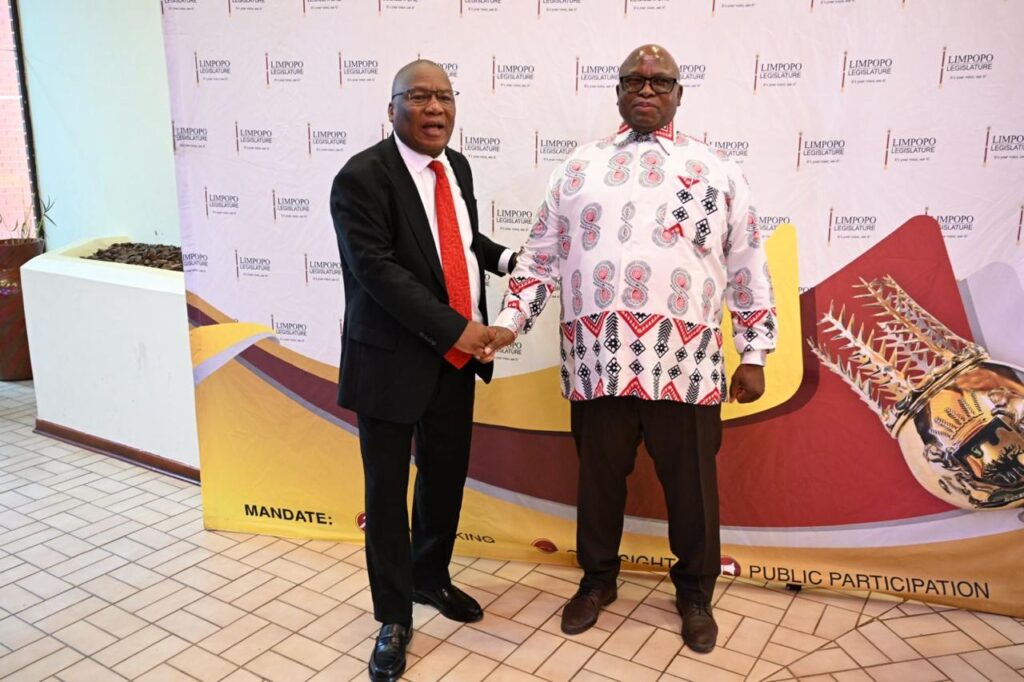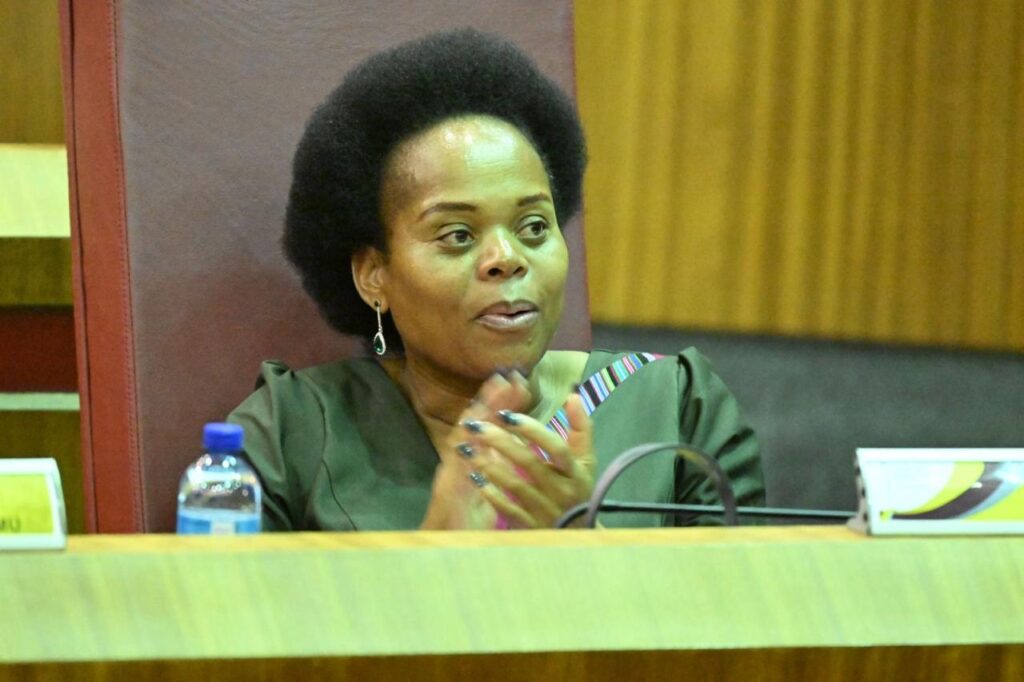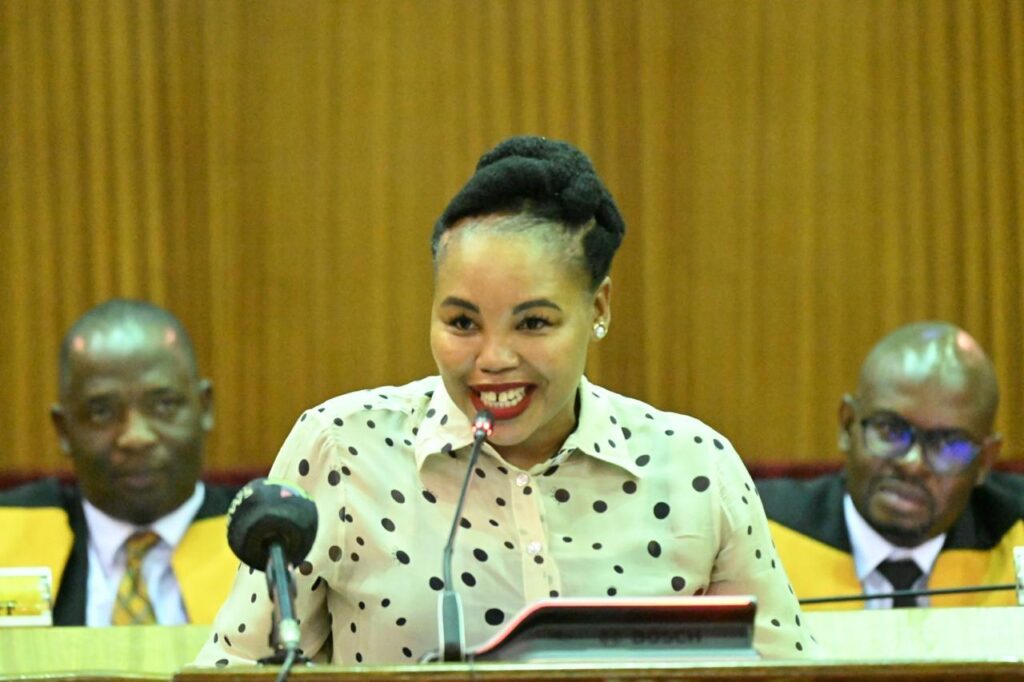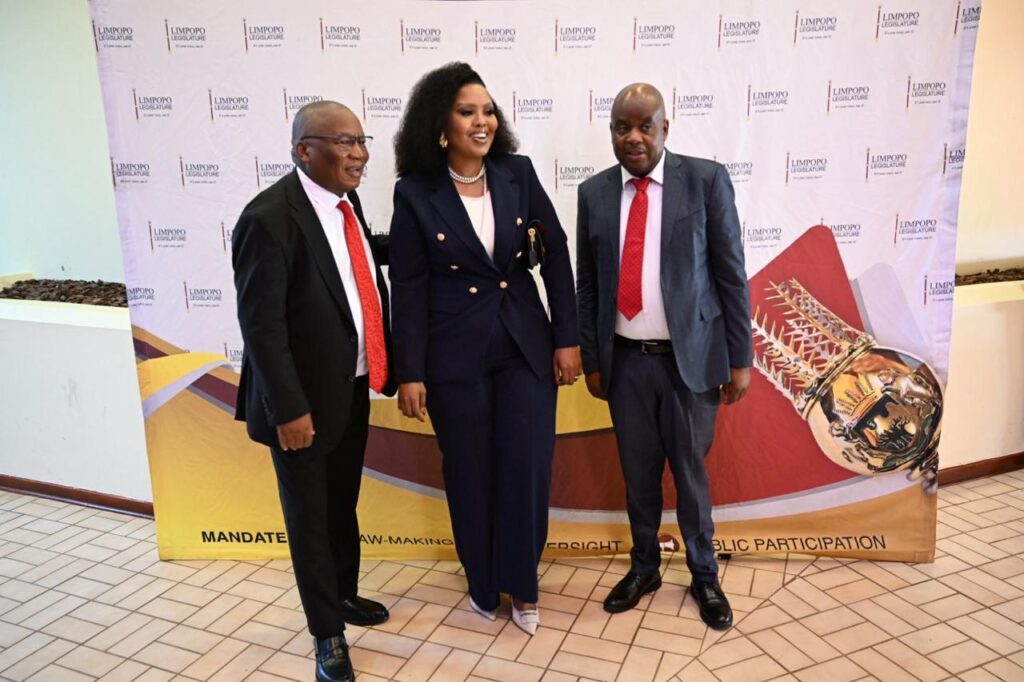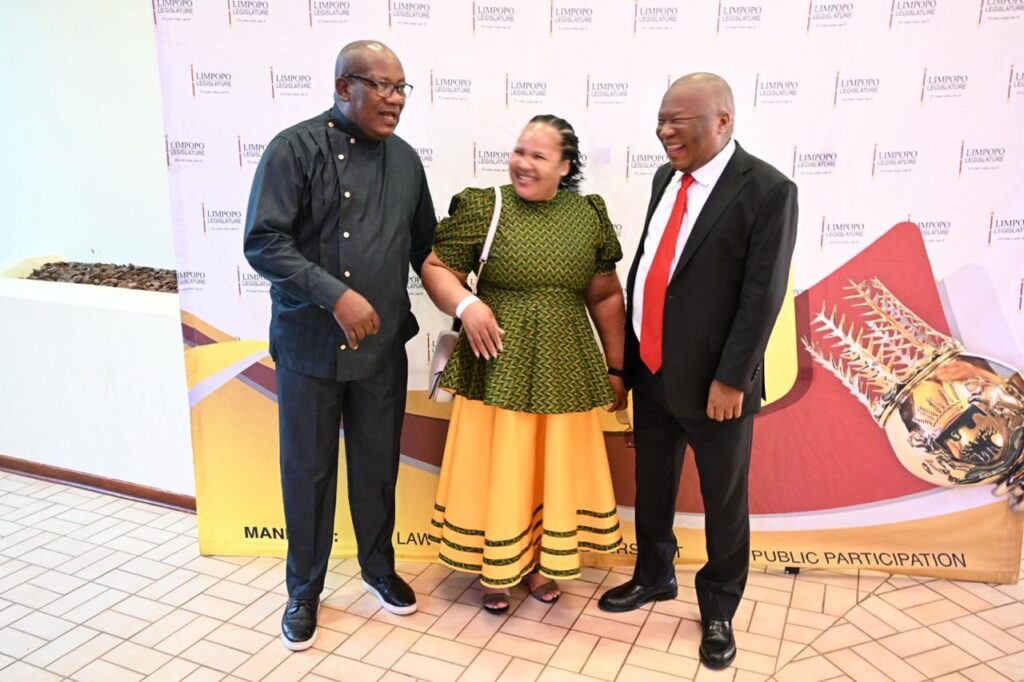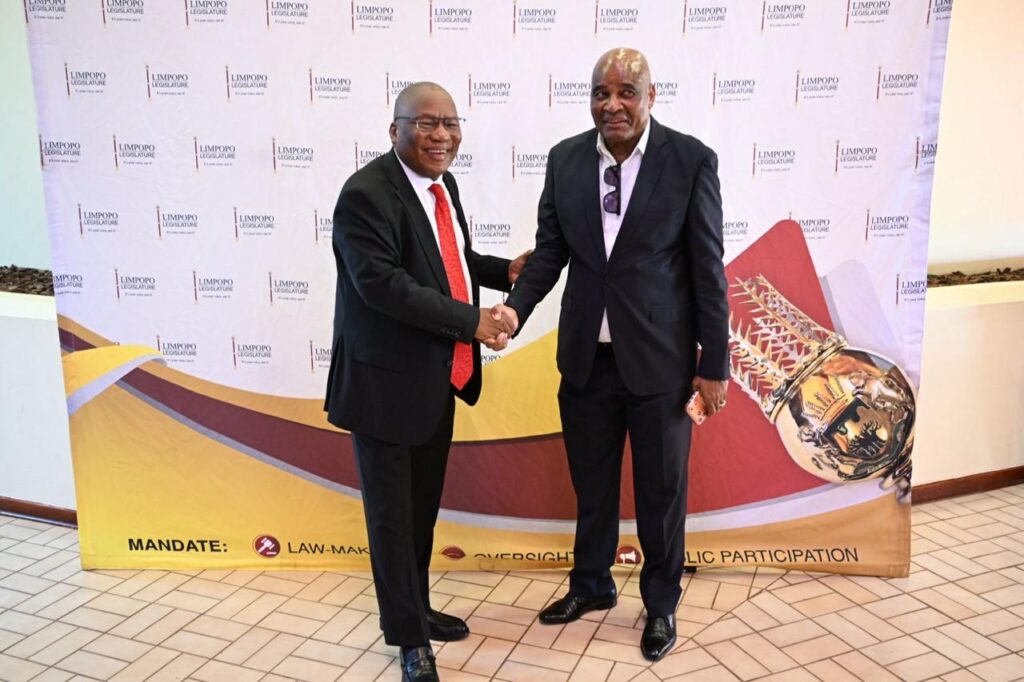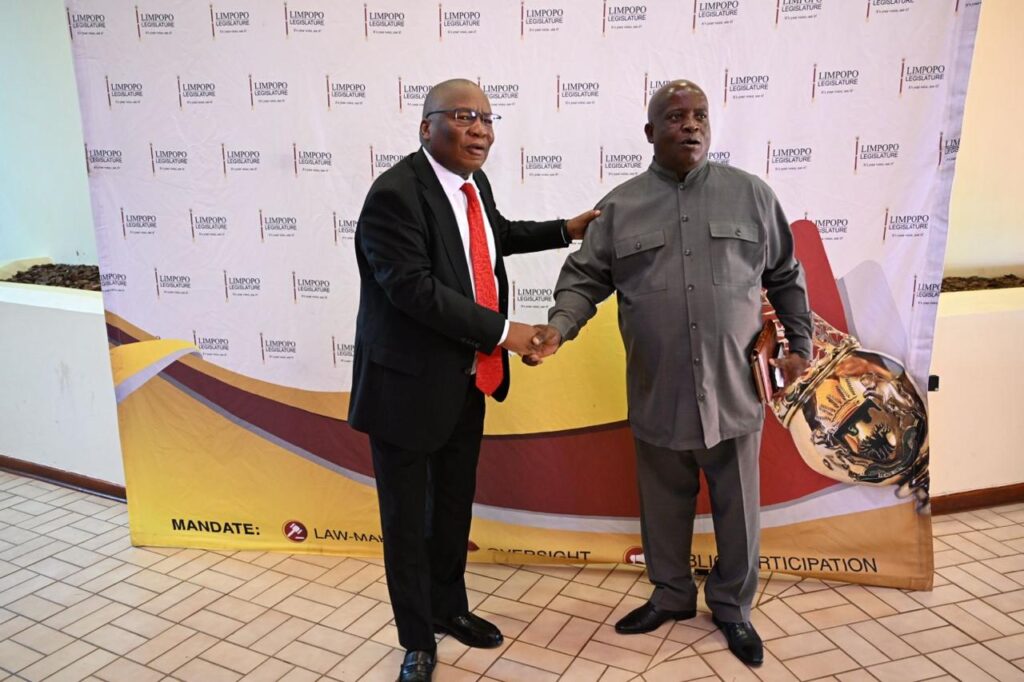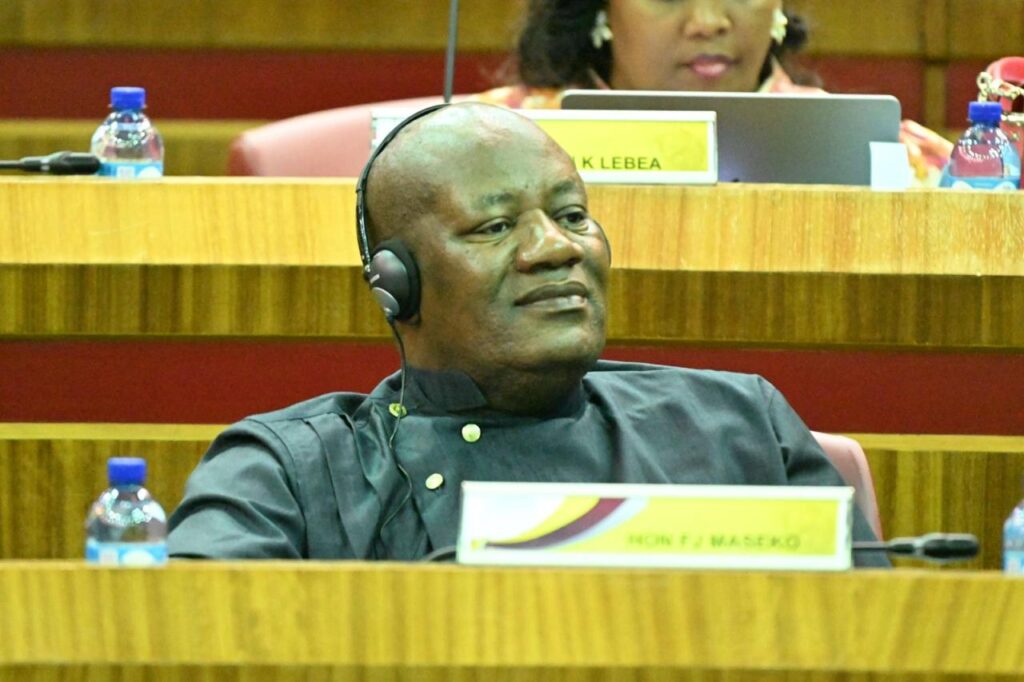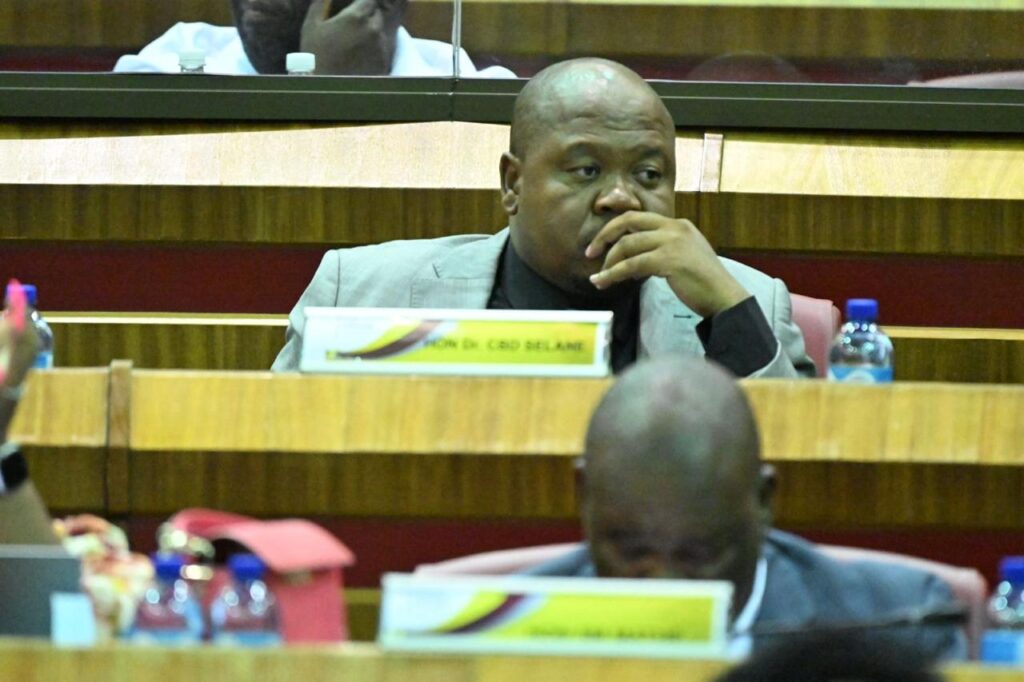
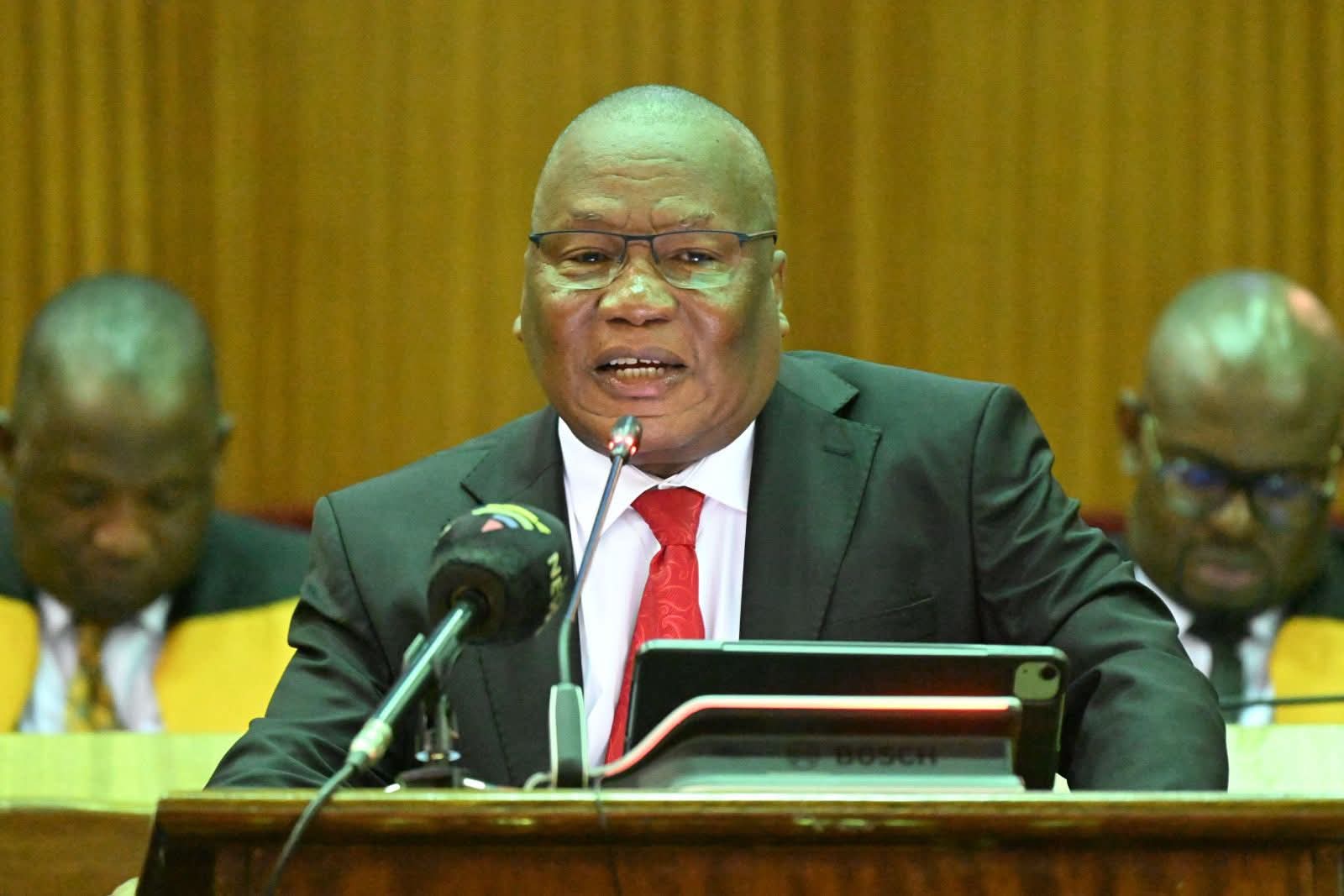
Kgabo Mahoai delivers the 202627 Limpopo Provincial Budget at the Legislature in Lebowakgomo, outlining government’s R90.4 billion spending plan focused on infrastructure development, economic growth and improved service. Picture Credit: X
By Aisha Zardad
Limpopo – The Limpopo Provincial Government has tabled a R95.856 billion provincial budget for the 2026/27 financial year, outlining plans to rebuild infrastructure, stimulate economic growth, and improve service delivery across the province.
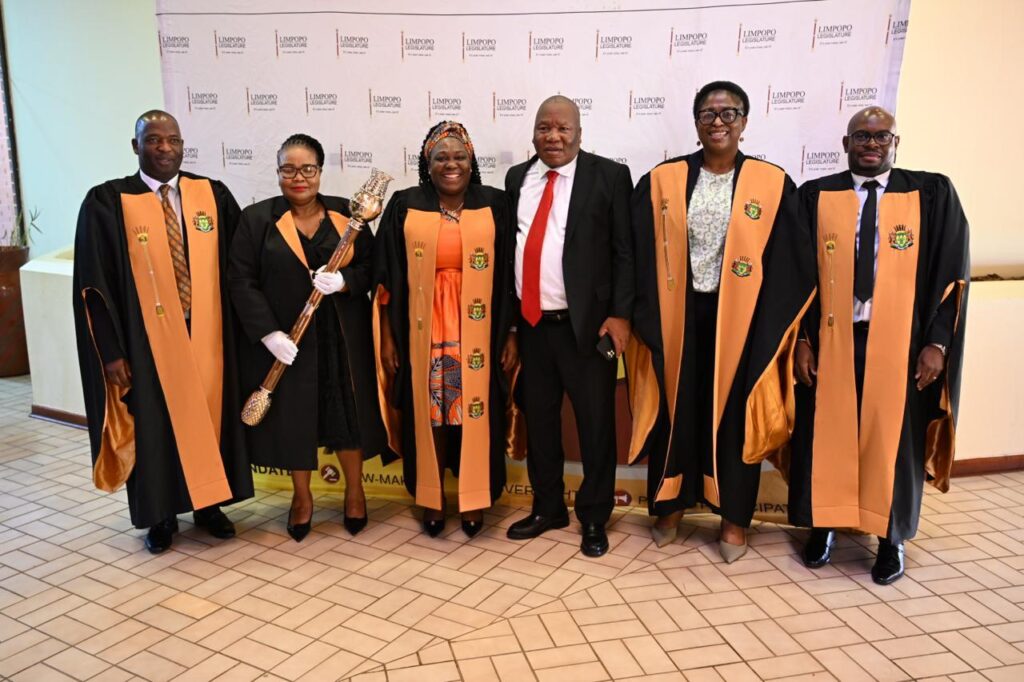
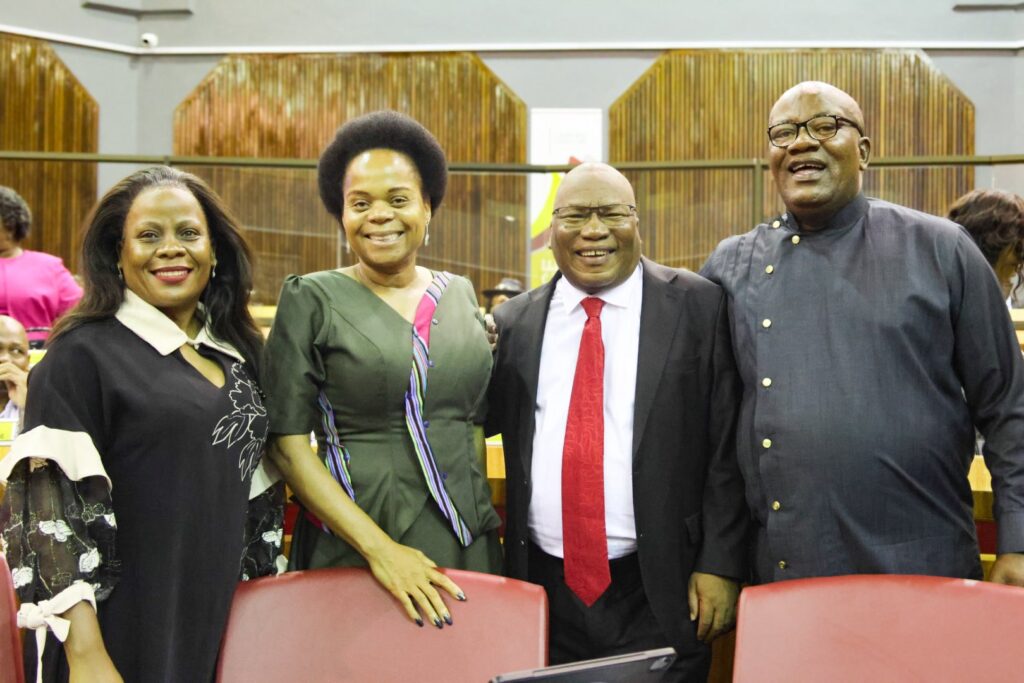
Presenting the provincial budget at the Limpopo Legislature in Lebowakgomo on Tuesday, MEC for Finance Kgabo Mahoai said the budget seeks to convert commitments made during the State of the Province Address into funded programmes. He acknowledged that residents often question how government will finance its plans.
He acknowledged that residents often question how government will finance its plans. “These pronouncements are good… but where will the money to fund them come from? So… how much money do we actually have?”
Mahoai explained that the provincial budget represents the point where policy promises must align with available resources. “This budget… is where vision meets reality, and where we should make sure that the promises made to the people of Limpopo are fully funded and kept.”
The budget follows the priorities set out by Limpopo Premier Dr. Phophi Ramathuba, which include economic development, job creation, infrastructure upgrades, and recovery from recent flood damage.
The R95.856 billion provincial budget will fund the delivery of services across all departments, while balancing rising service delivery demands and constrained public finances. Mahoai noted that provincial departments often compete for larger allocations, but limited resources require careful distribution.
He referred to an African proverb to illustrate the challenge of sharing limited funds across competing needs. “Bana ba motho ba ngwathelana hlogwana ya tsie… meaning as children of the same parent we can share as little as a locust’s head.”
“It is our collective responsibility to ensure these funds are directed towards maximum positive impact, driving progress and prosperity for all our communities. This budget reflects challenges but responsible choices,” said Mahoai.
The MEC said the provincial treasury must ensure that the budget supports government’s priorities while maintaining financial discipline. Most of the province’s funding continues to come from transfers from national government, particularly through the equitable share allocation of R78.951 billion, conditional grants amounting to R13.810 billion, and provincial own revenue expected to generate R2.240 billion.
Infrastructure development and maintenance remain a major priority in the provincial budget, with a total infrastructure allocation of R216 billion for the 2026/27 financial year, forming part of an MTEF infrastructure plan of R70.3 billion.
Government plans to focus particularly on repairing roads, bridges, and other infrastructure damaged by floods earlier this year, especially in areas such as Vhembe and Mopani districts. Funding allocations have been set aside to support reconstruction efforts as well as longer-term infrastructure improvements across the province. Infrastructure spending will also support broader economic activity by improving transport networks and enabling easier movement of goods and services.
A significant portion of the funding will go toward road maintenance and upgrades, with R3.020 billion earmarked for roads maintenance, R2.040 billion for infrastructure upgrades, and R2.496 billion for capital transfers, mainly supporting housing projects.
The Department of Public Works, Roads and Infrastructure will receive R4.809 billion for infrastructure delivery and maintenance, while education infrastructure will receive R1.914 billion, health infrastructure R1.009 billion, and CoGHSTA R1.043 billion.
“With regards to CoGHSTA funds have been strategically reprioritised from the human settlements development grant to bolster the informal settlements upgrading partnership grant, with the aim of improving living conditions in informal settlements,” he said.
Provincial authorities believe improved infrastructure will play a key role in attracting investment and supporting economic growth.
The social cluster, which includes education, health, and social development, continues to receive the largest portion of the provincial budget.
The Department of Education will receive R38.7 billion, supporting schools, teachers, and learner programmes. The Department of Health is allocated R26.4 billion, with an additional R90.911 million linked to performance incentives. The Department of Social Development will receive R2.476 billion to support vulnerable communities, including children, older persons, and people with disabilities.
Funding will support infrastructure, learning materials, healthcare services, social welfare programmes, and initiatives aimed at improving outcomes and creating job opportunities.
The Infrastructure Cluster, led by the Department of Public Works, Roads and Infrastructure, will receive R7.5 billion in total. These funds will support:
- Maintenance and upgrading of provincial roads
- Rebuilding flood-damaged infrastructure
- Development of public facilities such as government buildings
- Broader infrastructure investment aimed at supporting economic growth
A large portion of the funding will go toward road maintenance and rehabilitation projects to improve connectivity between rural communities and economic centres.
The department will also receive disaster-related funding to help restore infrastructure damaged by recent severe weather events.
The economic cluster, including departments responsible for economic development, agriculture, tourism, and transport, will receive several billion rand to strengthen Limpopo’s productive sectors.
The Department of Economic Development, Environment and Tourism will receive R2.2 billion to support programmes aimed at attracting investment, promoting tourism, and supporting small businesses. The Department of Agriculture and Rural Development is allocated R2.3 billion, funding agricultural support programmes, farmer development initiatives, and projects aimed at strengthening food security. The Department of Transport and Community Safety will receive R2.5 billion, aimed at road safety programmes, traffic law enforcement, and transport infrastructure initiatives.
Government plans to support economic growth through programmes that encourage business development, investment promotion, and tourism expansion, with continued support for small businesses and emerging entrepreneurs.
Agriculture remains a strategic sector for Limpopo’s economy, particularly in rural areas where farming supports livelihoods and food security. The provincial government has allocated R2.3 billion to strengthen farmers’ programmes, procure equipment such as tractors, and increase agricultural productivity while supporting job creation.
Government also plans to strengthen partnerships with national departments and agricultural organisations to improve support for emerging farmers and expand access to markets.
The provincial government will continue supporting municipalities, with the Department of Cooperative Governance, Human Settlements and Traditional Affairs receiving R3.6 billion to support housing programmes and municipal development initiatives.
Support will focus on infrastructure planning, financial management, service delivery programmes, and improving municipal capacity.
The budget also provides funding to strengthen governance, financial management and oversight across provincial departments.
The Provincial Treasury will receive R485 million to support financial oversight, budgeting processes, and improved fiscal management across government departments. Government institutions, including entities and oversight bodies, will also receive funding to improve service delivery and ensure efficient use of public funds.
Other departments receiving notable allocations include the Office of the Premier with R1.4 billion and Sport, Arts and Culture with R676 million.
Mahoai emphasised that the budget is designed to implement the policy direction outlined during the State of the Province Address. The provincial government aims to ensure that economic growth, service delivery improvements, and infrastructure development translate into real benefits for communities.
“This budget reflects discipline without abandoning development. It protects education and health, drives infrastructure investment, strengthens agriculture and enterprise development and enforces governance reform,” said Mahoai.
He said government remains committed to ensuring that the limited resources available are used effectively to improve the lives of Limpopo residents.
“This budget is where vision meets reality.”