
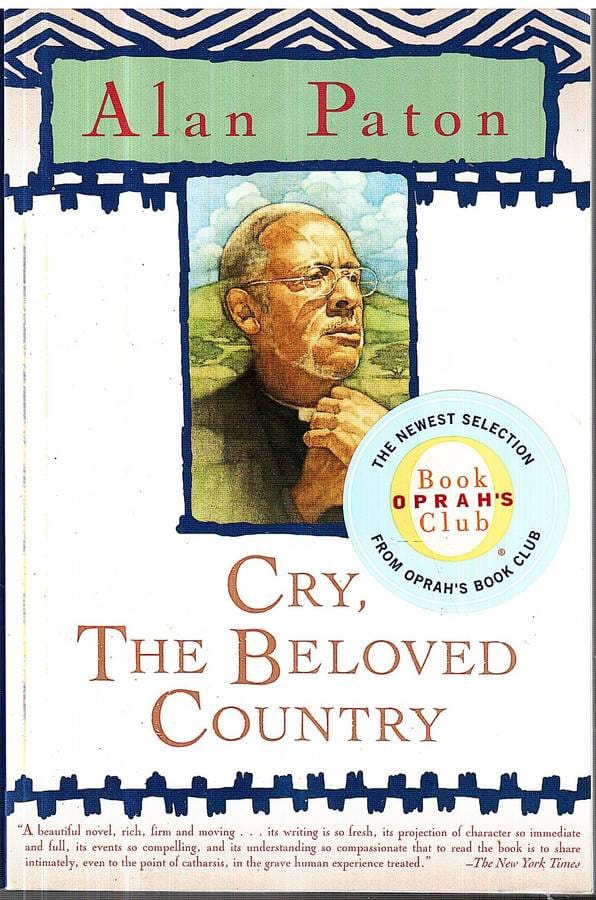
Alan Paton’s “Cry The Beloved Country”, the most famous, and important novel South Africa’s history. Picture Credits: Bob shop
By Duncan Mnisi
Book Review — Alan Paton’s Cry, the Beloved Country remains a cornerstone of South African literature. The novel follows Reverend Stephen Kumalo, a humble pastor from the rural hills of Ixopo, as he travels to the sprawling, perilous streets of Johannesburg in search of his son, Absalom. Along the way, Paton paints a vivid portrait of a nation caught between tradition and modernity, love and fear, justice and injustice.
The opening chapter introduces the “lovely road” that winds into the hills—a symbol of the sacred earth that sustains the people but suffers deeply when exploited. In Chapter 7, Kumalo meets his brother John in Johannesburg, and their tense conversation highlights the clash between old-world values and a new, more cynical urban mindset. It is here that Paton writes, “I see only one hope for our country… when white men and black men… come together to work for it.”
Chapter 9 delivers the shocking murder of Arthur Jarvis, a turning point that forces both Kumalo and the reader to confront the brutal reality of racial violence. Throughout the novel, Paton’s prose remains lyrical yet grounded, transforming the South African landscape into a character in its own right.
His memorable lines linger long after the final page:
- “Sorrow is better than fear. Fear is a journey, a terrible journey, but sorrow is at least an arriving.”
- “The tragedy is not that things are broken. The tragedy is that things are not mended again.”
- “For who can stop the heart from breaking?”
- “When the storm threatens, a man is afraid for his house. But when the house is destroyed, there is something to do.”
These passages capture Paton’s belief that pain, while inevitable, can lead to deeper understanding and, ultimately, healing.
Why the Book Still Matters
Paton’s themes—family, redemption, and the moral cost of oppression—remain as urgent today as they were more than seventy years ago. The novel’s plea for reconciliation and shared humanity echoes in contemporary conversations about social justice across the world. As one Goodreads reader noted, “Paton writes with a compassion that feels like a warm handshake and a quiet prayer at the same time.”
What Readers Are Saying
- “A powerful indictment of apartheid that never feels dated. The characters are fully human, and the landscape sings.” – Maria K., Amazon reviewer
- “I read this for school and couldn’t put it down. The story of a father’s love and a nation’s pain stayed with me.” – James L., Twitter
- “Paton’s description of the ‘lovely road’ in Chapter 1 is one of the most beautiful passages I’ve ever read.” – Sofia M., BookBub
These reactions highlight the novel’s emotional force and enduring relevance.
A Must-Read
Cry, the Beloved Country is more than a historical novel—it is a heartfelt call to “work for the good of our country.” With compassionate characters, rich symbolism, and timeless themes, it remains essential reading for anyone interested in South African history, human rights, or simply a story that moves the soul.
If you haven’t walked its pages, find a quiet spot under a South African sky, open the book, and let Paton’s words wash over you. You’ll feel the earth beneath your feet — and the weight of a nation’s heart on your shoulders.