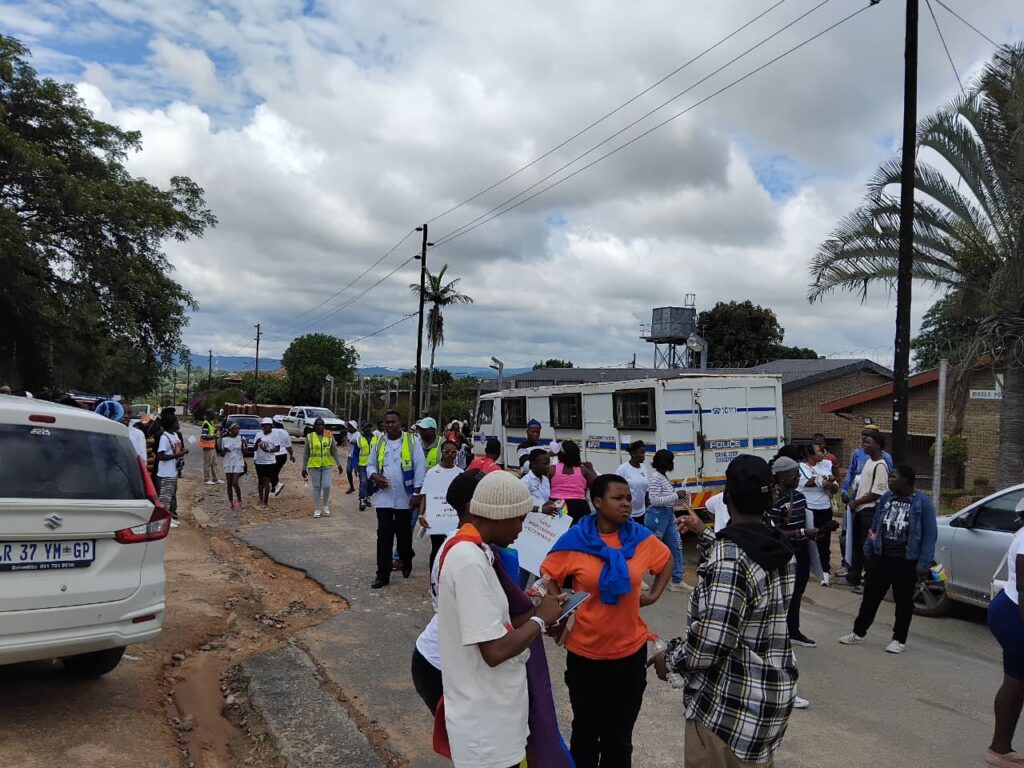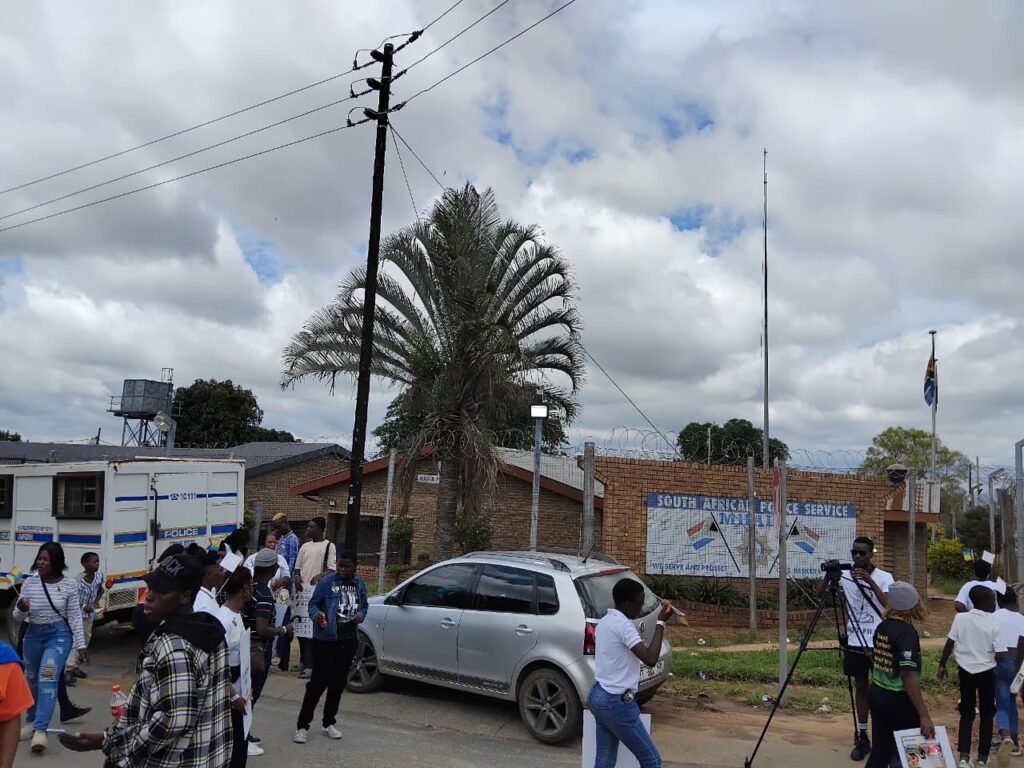
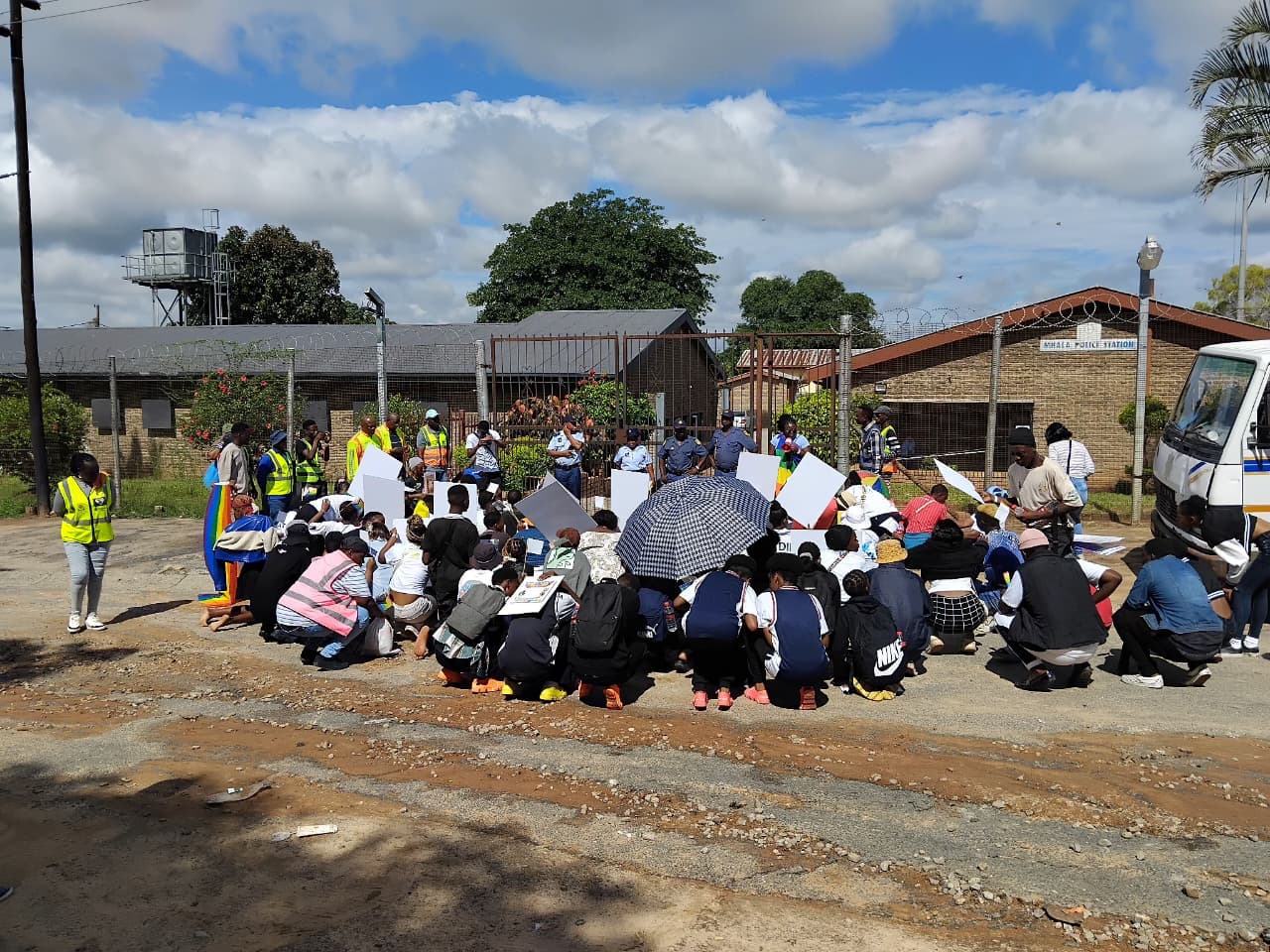
Advocacy groups hand over a memorandum to Mhala Police Station, urging improved protection and support for LGBTQIA+ survivors of violence and discrimination. Credits: Timeless News
By Duncan Mnisi
Bushbuckridge – Civil society organisations within the LGBTQIA+ sector are calling for urgent reforms in policing and justice systems, warning that survivors of hate crimes, discrimination and abuse are facing “trauma within the system” due to ongoing secondary victimisation.
On Saturday, representatives from the Bushbuckridge Local Municipality, Civil Society Forum (LGBTQIA+ Sector), Sonke Gender Justice, Colour Splash, Conservation South Africa and the Forum for the Empowerment of Women submitted a memorandum to the Officer in Charge at the Mhala Police Station.
The memorandum highlights a growing trend: LGBTQIA+ survivors are withdrawing cases at alarming rates. Organisations say this is fuelled by insensitive treatment, a lack of support, and discriminatory behaviour by some officers.
“We cannot ignore the reality that a system meant to protect people is instead re-traumatising them. Survivors are pulling out of cases because they fear secondary victimisation more than the perpetrators themselves,”
— Nomalanga Ngwenya, Project Manager for Gender Justice in Mpumalanga
According to the memorandum, LGBTQIA+ people — especially women, trans and gender-diverse individuals — face disproportionate risks of violence. These dangers are compounded when survivors encounter biased questioning, ridicule, or inadequate protection when reporting crimes.
Visibility, dignity and fear
Caroline Sibuyi, organiser of the LGBTQIA+ Bushbuckridge sector, said the march was about both visibility and dignity.
“I feel happy and very positive about the march because we wanted Bushbuckridge residents and police officers to see that we exist and we can be together as the LGBTIQ+ community. All we need is acceptance and safety. I’m glad it was a peaceful march,” she said.
But she also expressed the deep fear many queer individuals live with:
“The hatred that comes from society… I live in fear that any day it can be me who gets raped or murdered. I’m living my life without hurting anyone, but I fear for my own.”
Organisations warned that many case withdrawals are not voluntary. Survivors often feel coerced or pressured after facing unsupportive or discriminatory treatment inside police stations.
“When a survivor walks into a police station and is met with judgement or ridicule, that case is already lost. Trust collapses instantly,”
— Advocacy representative during the handover
Key Issues Raised
The memorandum outlined three urgent concerns:
- Secondary Victimisation: Re-traumatisation through biased, insensitive or discriminatory police conduct.
- Withdrawal of Cases: High withdrawal rates fuelled by fear, intimidation and mistrust of the justice system.
- Protection of Survivors: A need for survivor-centred protocols from the moment a case is reported.
Proposed Actions for Police
To address the crisis, organisations called for the following:
- Sensitivity Training: Mandatory training for law enforcement on LGBTQIA+ rights, identities and vulnerabilities.
- Safe Reporting Spaces: LGBTQIA+-friendly areas in police stations where survivors can report cases without fear of discrimination.
- Awareness and Outreach: Public education campaigns to help survivors understand their rights and available support.
- Support Through the Legal Process: Access to mental-health care, legal guidance and physical protection where necessary.
- Collaboration With Advocacy Groups: Partnering with LGBTQIA+ organisations to monitor cases and ensure accountability.
In closing, Ngwenya stressed the moral responsibility of law enforcement agencies:
“This is not only a legal responsibility — it is a moral imperative. We are talking about protecting some of the most vulnerable members of our society.”
“We look forward to working towards a more inclusive and equitable future where justice is truly accessible to all, regardless of gender or sexual identity.”
Police Response
Receiving the memorandum, Lieutenant-Colonel Brian Mnisi, Station Commander at Mhala SAPS, assured marchers that their concerns will be taken seriously.
“We understand your frustrations and challenges as highlighted in this memorandum, and we will take it to the district so that it reaches the provincial office. The SAPS will take immediate action to create a safer environment for all and ensure your voices are heard,” he said.
Mnisi added that SAPS works collectively to address challenges faced by all communities.
Organisations have urged police to act swiftly and committed to continued engagement to ensure meaningful change for LGBTQIA+ individuals in Mpumalanga and beyond.