
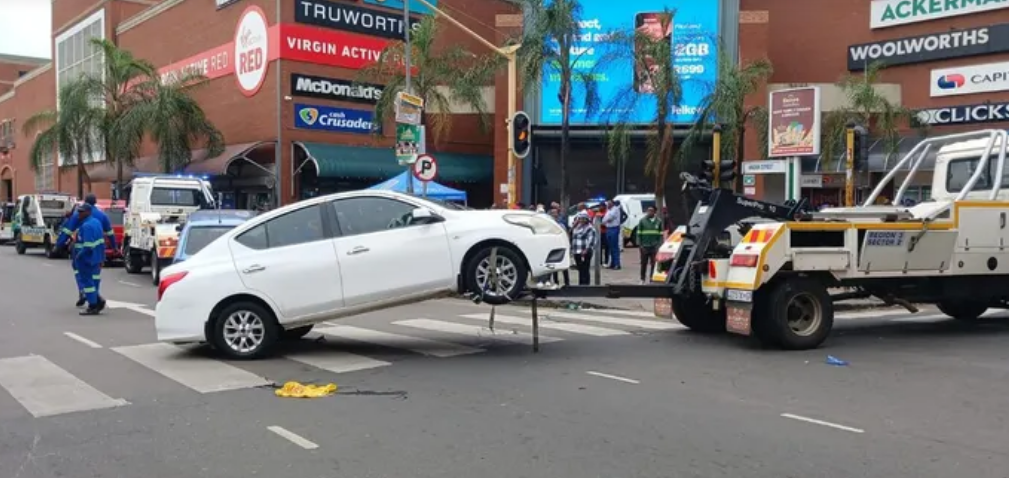
Amaphela taxi operators clash with Tshwane Metro Police over impoundments in Pretoria’s CBD. Picture Credit: IOL
By Aisha Zardad
Pretoria – Taxi operators took to the streets of Pretoria’s Central Business District on Monday to protest the impoundment of their vehicles by the Tshwane Metro Police Department (TMPD), highlighting long-running disputes over regulation of unlicensed taxis commonly referred to as “amaphela.”
During the demonstration, drivers from Atteridgeville blocked key routes to draw attention to what they say are unjust impoundments of their vehicles. Law enforcement responded by impounding five taxis and arresting four drivers for public violence, according to the TMPD.
The South African National Taxi Council (Santaco) in Tshwane has urged government authorities to address the issue of unlicensed transport operators, acknowledging that these smaller vehicles are filling a transport gap in townships.
Santaco spokesperson Ernest Bokaba made clear that the individuals involved in the protest were not part of the organisation’s membership, explaining that they were unlicensed operators of small cars used as taxis in township areas.
“The thing is we can’t blame the law-enforcement officers because if you don’t have permits you are basically operating illegally. They will have to impound your vehicle,” Bokaba said, emphasising both the legal challenges and the transport role that “amaphela” play in underserved communities.
He urged government to pursue a regulation strategy that acknowledges the service these vehicles provide, rather than simply cracking down on them. “They have actually been there for many years. Most of the townships have seven-seater Avanzas and they are helping the community where 15-seater taxis can’t operate…” Bokaba said, calling for a structured approach to incorporating them within the law.
Meanwhile, Tshwane’s Mayco member for Community Safety, Hannes Coetzee, stressed that law enforcement cannot be intimidated into abandoning regulatory actions. Police moved in to restore order after the protests brought parts of the CBD to a standstill, posing risks to commuters, residents, and emergency access routes.
Coetzee reinforced the city’s commitment to enforcing transport laws “with firmness, fairness and without fear or favour,” even when doing so is politically uncomfortable.