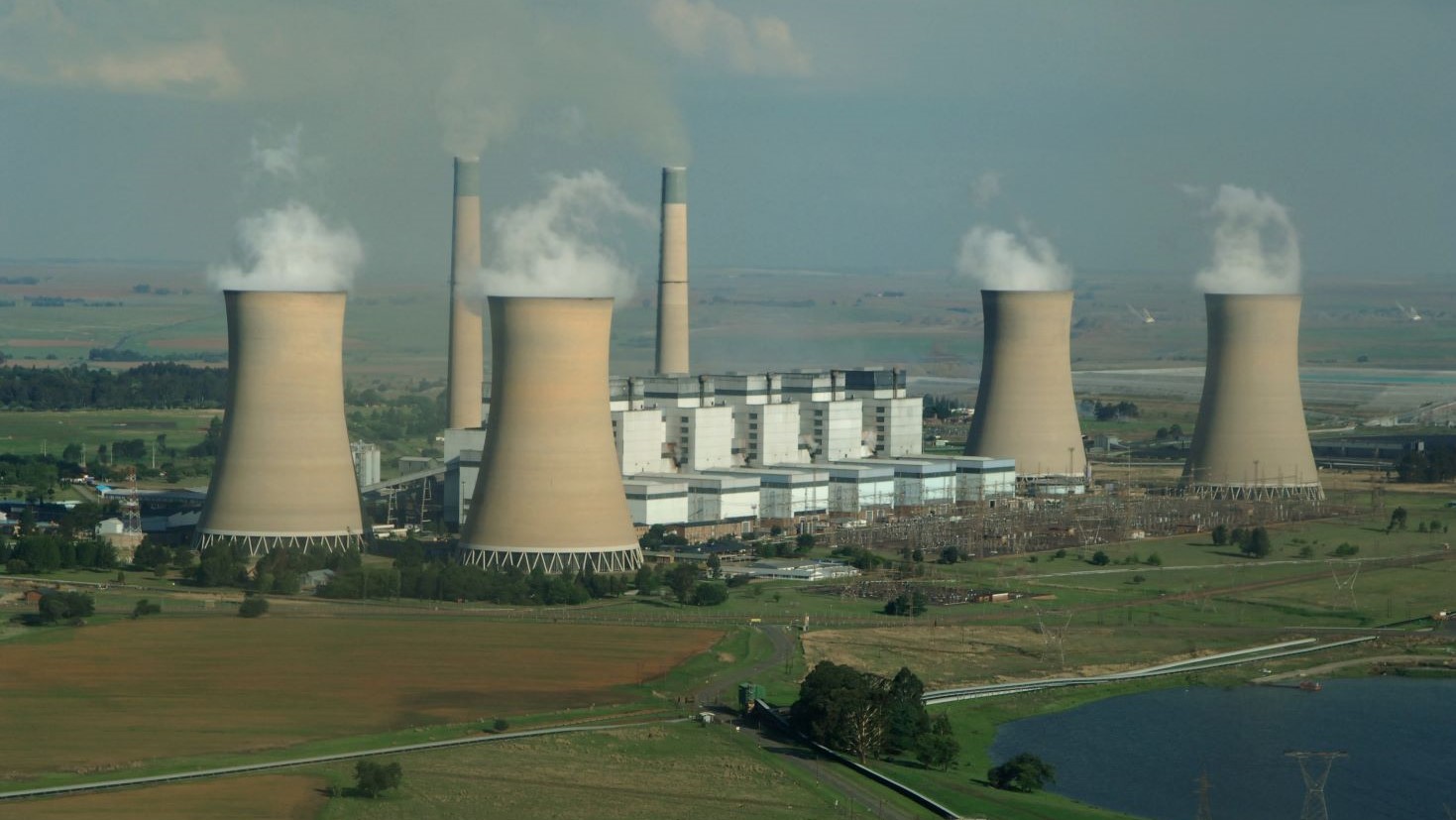
Concerns are growing that Eskom’s revised structure could jeopardise international funding commitments. Picture Credit: Eskom
By Aisha Zardad
South Africa – South Africa’s decision to revise its long-planned breakup of Eskom is facing growing resistance from creditors and international funders, raising concerns that billions of rands in foreign-backed financing could be placed in jeopardy.
The revised unbundling strategy, approved by Electricity Minister Kgosientsho Ramokgopa, restructures Eskom Holdings SOC Ltd. into generation, distribution, renewable energy and transmission subsidiaries that all remain under a single holding company. The plan was outlined in a statement published on Eskom’s website earlier this month.
This marks a significant departure from the original vision announced by President Cyril Ramaphosa in 2019, which proposed splitting Eskom into three fully independent entities. That earlier approach was intended to create a competitive electricity market, improve governance, and make it easier to manage the utility’s substantial debt burden.
Analysts and funders now warn that the revised structure could undermine key reform goals — and threaten the continuation of the $8.3 billion Just Energy Transition Partnership (JETP), a financing programme backed by several European governments to support South Africa’s shift away from coal-fired power.
The changes may also weaken Eskom’s ability to raise funding for its planned expansion of the national transmission network, which is expected to require up to 14,000 kilometres of new power lines at an estimated cost of R440 billion.
Professor Anton Eberhard, an emeritus professor at the University of Cape Town’s Graduate School of Business, said the revised strategy was not what lawmakers had envisaged when drafting the Electricity Regulation Amendment Act.
“The conflict of interest is not resolved,” Eberhard said. “It creates an opportunity for Eskom to frustrate the entry of private generators — particularly renewable energy producers — by failing to provide adequate transmission infrastructure.”
Similar concerns were raised by Olga Constantatos, head of credit at Futuregrowth Asset Management, which holds Eskom bonds. She warned that having all subsidiaries report to the same board creates structural conflicts and falls short of international norms.
“The expectation was that the National Transmission Company of South Africa would be independent,” Constantatos said, adding that Eskom’s existing lenders could resist the changes because they may be structurally subordinated to any new debt raised at transmission level.
Eskom, which earlier this year reported its first profit in eight years, rejected claims that the revised structure represents a policy shift. The utility said retaining the transmission company within the holding structure is consistent with the Electricity Regulation Amendment Act.
“The reference to ‘revised’ does not apply to NTCSA asset ownership,” Eskom spokesperson Daphne Mokwena said in an emailed response. She added that conflicts of interest would be managed by an independent Transmission System Operator, expected to be established by 2030.
However, critics remain sceptical. More than 100 countries — including the UK, India and Russia — have unbundled their power utilities into fully independent entities, often with privately listed transmission operators.
Former Eskom chief executive André de Ruyter previously argued that separating and potentially listing the transmission entity was “absolutely critical” to the future of South Africa’s electricity industry.
“If Eskom entities retain ownership, any independent entity outside Eskom dealing with them will be stillborn,” said Roderick Crompton, a former Eskom board member and adjunct professor at Wits Business School.
Diplomats familiar with the JETP discussions said the revised structure could pose a serious obstacle to future funding, noting that the programme depends on South Africa creating a competitive wholesale electricity market.
Whether Eskom’s revised unbundling plan can satisfy both domestic reform goals and international funders now remains a key test for the country’s energy transition.