
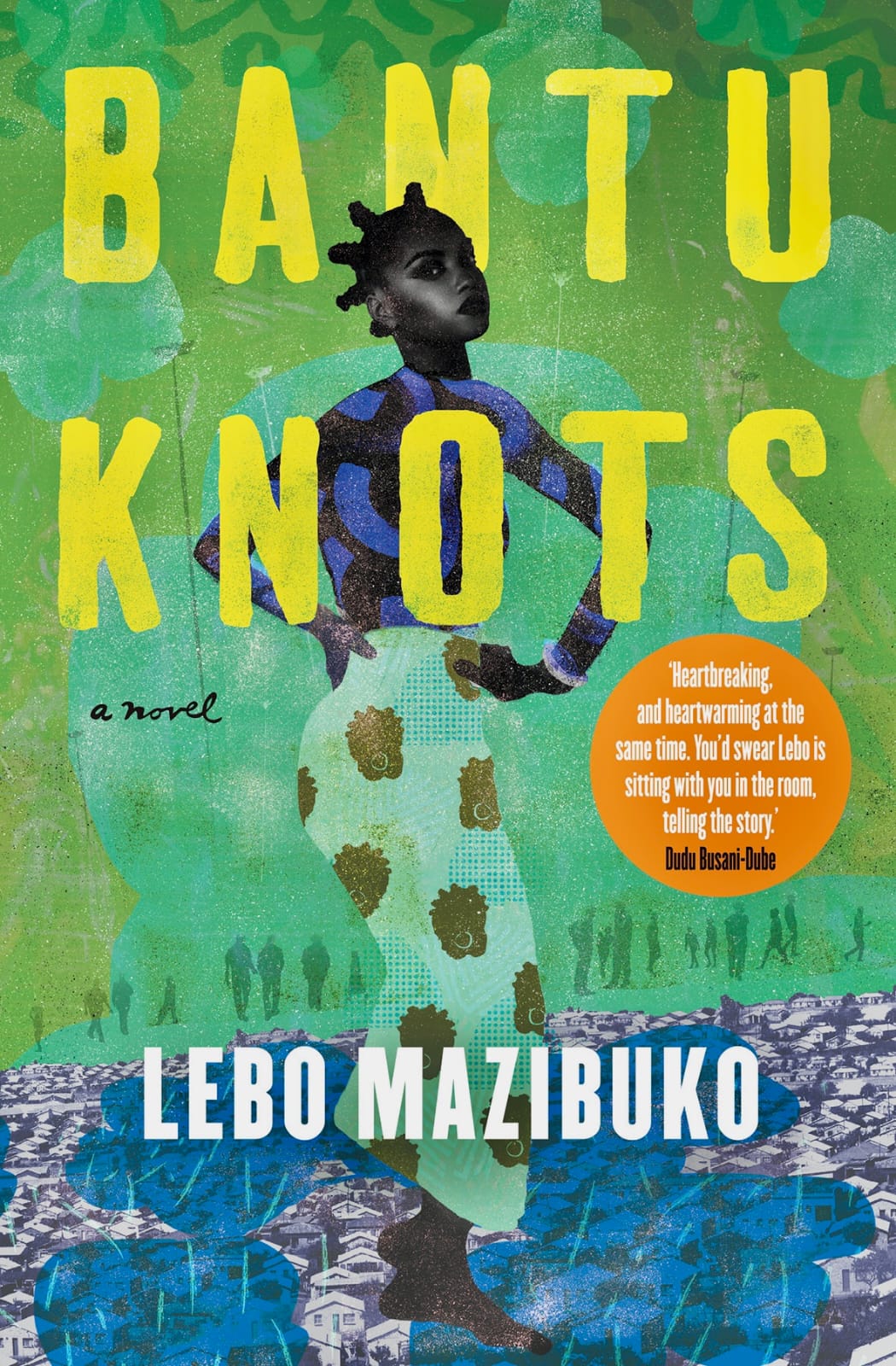
Lebo Mazibuko’s debut novel follows Ledi in Pimville as she trades her bantu knots for a new look, wrestles with colour‑shame, and learns that beauty can be her own. Picture Credits: Goodreads
By Duncan Mnisi
Book Review – In her debut novel, South African writer Lebo Mazibuko tells the story of Ledi, a 12-year-old from Pimville who dreams of trading her tightly-coiled bantu knots for the glossy hair on a Dark and Lovely box.
Released in June 2025, the book quickly became a talking point in literary circles for its candid exploration of colourism, poverty, and the pressure to conform to Western beauty standards.
Mazibuko, who grew up in Soweto and studied journalism at the University of Johannesburg, told The Mail & Guardian in 2025, “I wanted to write a story that mirrors the everyday conversations I heard about hair, skin, and money in my own family.” The novel is set against the backdrop of the “blesser” culture, a feature of urban youth life in South Africa.
The story is structured into ten short chapters, each named after a hair-related phrase. Chapter three, Knots of Memory, opens with: “My grandmother’s hands smelled of soap and stories, but the knots on my head felt like a secret code nobody could read.” Chapter six, Mirror, Mirror, in a diary-entry style, captures Ledi’s inner conflict: “If I could trade my bantu knots for Nonhle’s hair, would I still be me?”
Mazibuko writes in simple, conversational English, sprinkled with isiZulu words, making the narrative accessible to younger readers while retaining depth for adults. The prose is punchy, and the dialogue feels authentic—an aspect widely praised by reviewers.
The novel also addresses serious social issues. Ledi’s desire to resemble her light-skinned mother reflects broader societal pressures. A 2023 report by the South African Institute of Race Relations found that 38 % of Black women feel pressure to lighten their skin. Mazibuko presents this reality through Ledi’s experiences, without preaching.
Bantu Knots is more than a story about hair; it is a coming-of-age tale that asks readers to consider the knots we all carry—whether tied to skin colour, money, or family expectations. With its accessible language and vivid chapter titles, the book is engaging for young and adult readers alike, while its deeper themes give it lasting relevance. For anyone interested in South African narratives that explore identity and self-acceptance, Bantu Knots is a page-turning, thought-provoking read.