
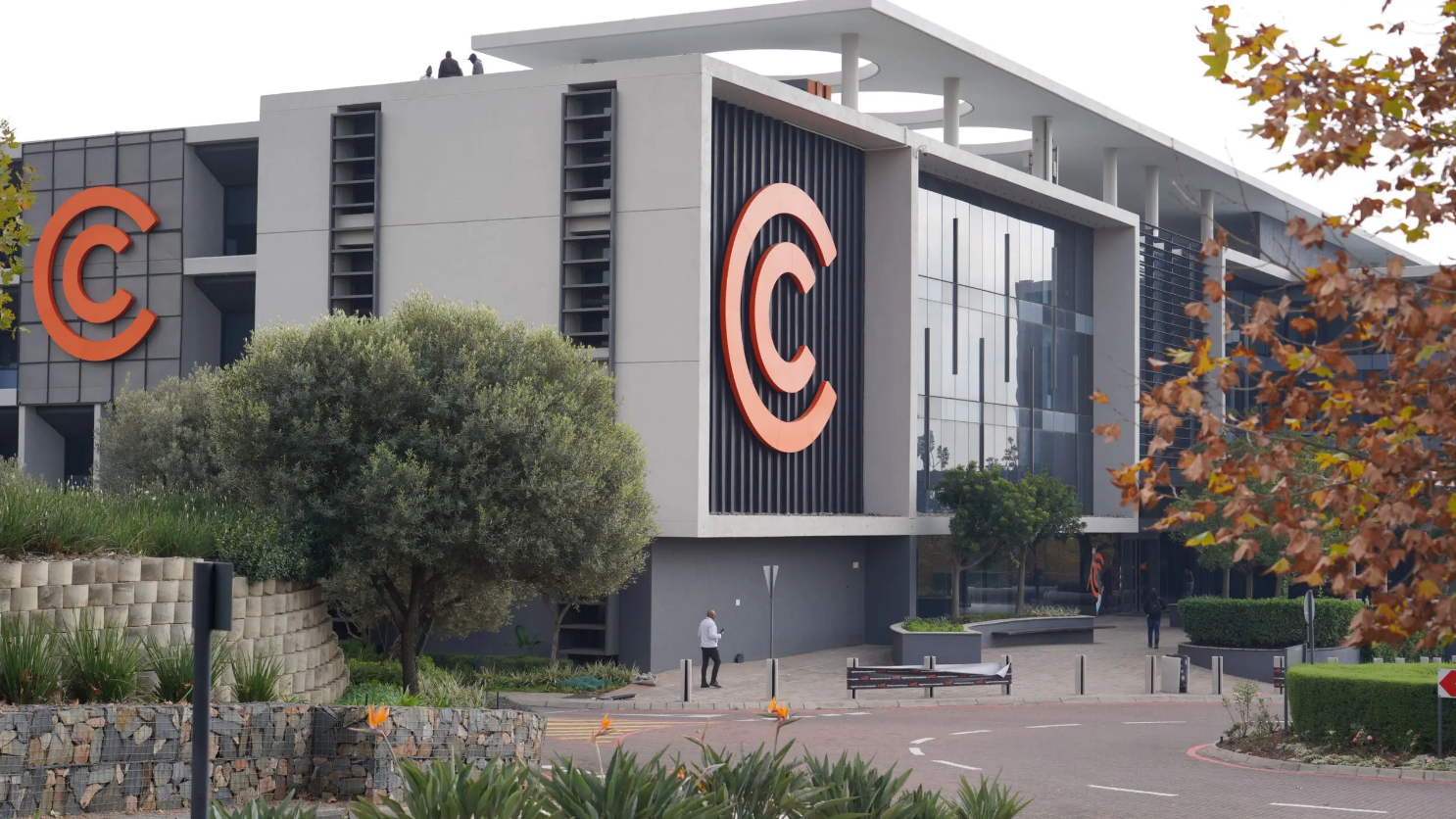
After 24 years as a private operator, Cell C officially steps onto South Africa’s main stage with its debut listing on the JSE—marking a historic turning point for the mobile network. Picture Credits: Tech Financials
By Aisha Zardad
South Africa – After 24 years in the South African mobile market, Cell C has officially become a public company. The mobile operator is now listed on the JSE, ending its long run as a privately owned business and marking a major turning point in its history — especially after nearly a decade under Blu Label’s ownership.
Blu Label first bought 45% of Cell C in 2017 for R5.5 billion through its subsidiary, The Prepaid Company. But instead of boosting Blu Label’s performance, Cell C became a major financial burden. By 2019, Blu Label had to write the value of its investment down to zero, and Cell C remained technically insolvent for most of its time under the group.
Despite the financial strain, Blu Label increased its stake to 53% and launched a major restructuring of Cell C. Part of that restructuring included selling Cell C’s network infrastructure and shifting to MTN’s network. MTN now runs a “virtual radio access network” for Cell C, allowing it to offer its own services and use its own spectrum. Cell C also entered a roaming deal with Vodacom.
Because it no longer has to spend billions maintaining its own network, Cell C has been able to focus on improving service quality and customer experience — something that has steadily improved over the past few years.
To address long-standing debt issues, Blu Label moved ahead with listing Cell C publicly. Through the IPO, Blu Label hopes to raise around R6.5 billion, which will go toward paying off interest-bearing loans and settling other debt.
Initially, Blu Label expected to price the shares between R29.50 and R35.50, which would have valued Cell C at up to R12 billion. But shortly before listing, Cell C had to lower the offer price to R26.50, reducing its valuation to around R9 billion.
Once trading opened on 21 November, the share price rose slightly to R27.30, giving Cell C a market value of R9.3 billion. Although the price increased from the revised offer, the IPO was seen as quieter than originally hoped.
Cell C says it expects future growth across prepaid, postpaid, enterprise and wholesale channels. The company is also expanding through retail stores and partnerships with mobile virtual network operators (MVNOs) — including major brands like Capitec, FNB and Shoprite.
CEO Jorge Mendes said the JSE listing is more than just a way to raise money.
“Our JSE listing confirms that a leaner, more agile model can compete effectively while keeping connectivity affordable for all South Africans. We’ve shown that purpose and profitability can coexist.”
Mendes added that the company is now positioned as an “agile, capex-light and partnership-driven” telco, using technology and innovation to deliver better value to customers and investors.
Although some investors remain cautious due to Cell C’s long and complex restructuring, Mendes believes the company has strong potential.
“There’s huge value in this asset,” he said. “We have a clear strategy and a business that will deliver growth. I’m excited to showcase that in the public markets.”
Cell C will continue to operate independently, though Blu Label remains its largest shareholder.